Discovery-to-Demo Alignment in Enterprise Sales
Structuring discovery intel into a brief keeps specificity alive through the demo.
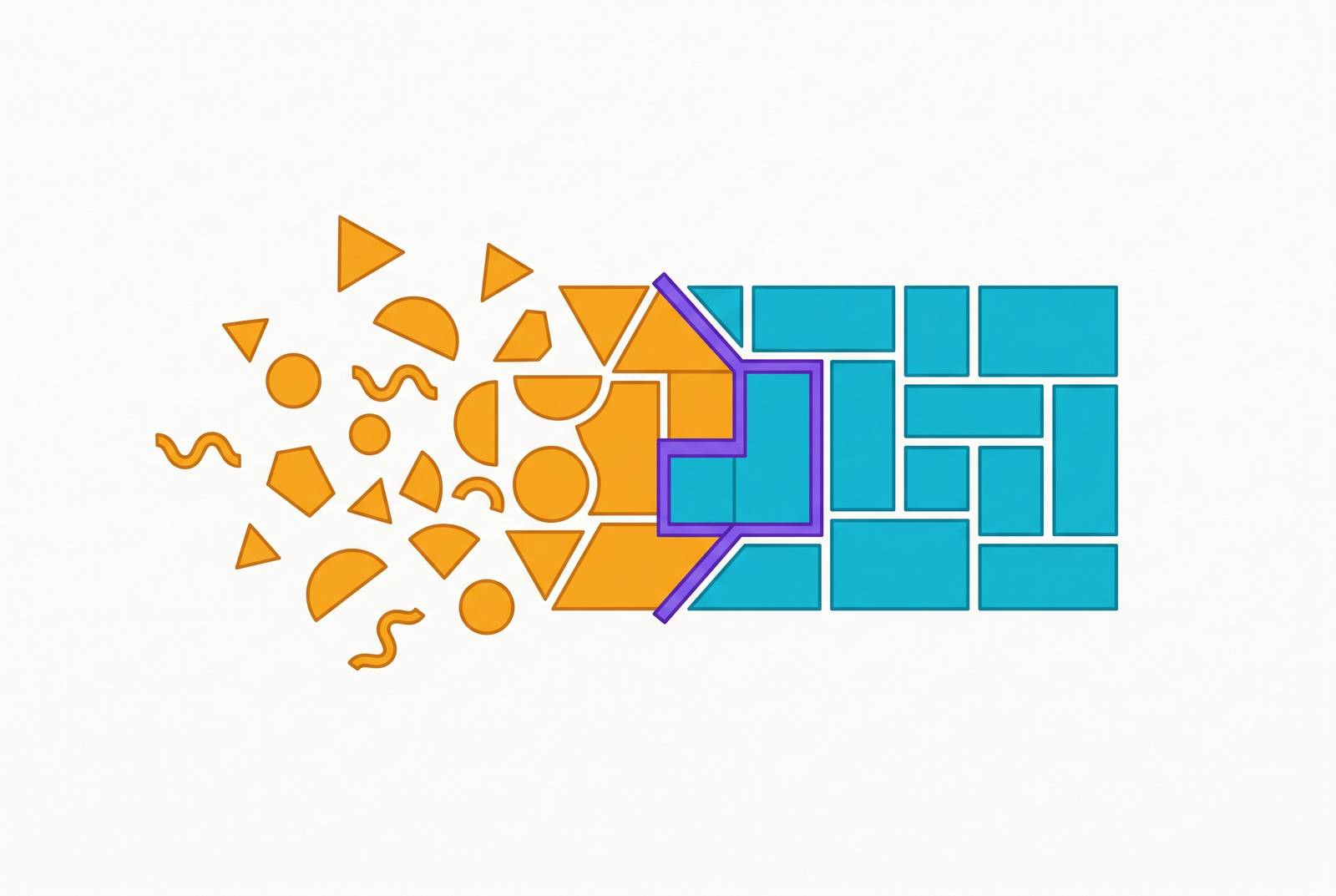
Enterprise sales teams don't lose deals at the discovery call, and they don't lose them in the demo room either. They lose them in the gap between the two, when everything a prospect just told a rep, in their own words, with their own numbers, gets typed into a notes field nobody reopens. The fix isn't a better discovery call or a slicker demo. It's a system that carries discovery intelligence directly into how the demo gets built, ordered, and delivered, and most teams don't have one.
The discovery brief is what connects the two. During or immediately after the discovery call, capture five things in a structured document: the primary pain in the prospect's exact words, the quantified impact they named out loud, the critical event with its actual date, a stakeholder map showing each person's role and concern, and explicit demo design instructions covering which workflows to show and which to skip. That brief then runs the demo directly: open with the pain in the prospect's language, show the workflow that resolves it before any broader product tour, build the narrative around the dollar or time figure they disclosed, sequence additional features by stakeholder, and close on the critical event timeline. The brief also shapes every follow-up asset, from tailored recordings to ROI summaries, so the discovery intelligence carries past the live call into the internal conversations the rep will never see.
What structured discovery is actually supposed to produce
Discovery isn't a conversation for its own sake. It's an intelligence-gathering operation, and what it's supposed to produce is a structured brief, not a transcript sitting in a call recording tool nobody has time to rewatch.
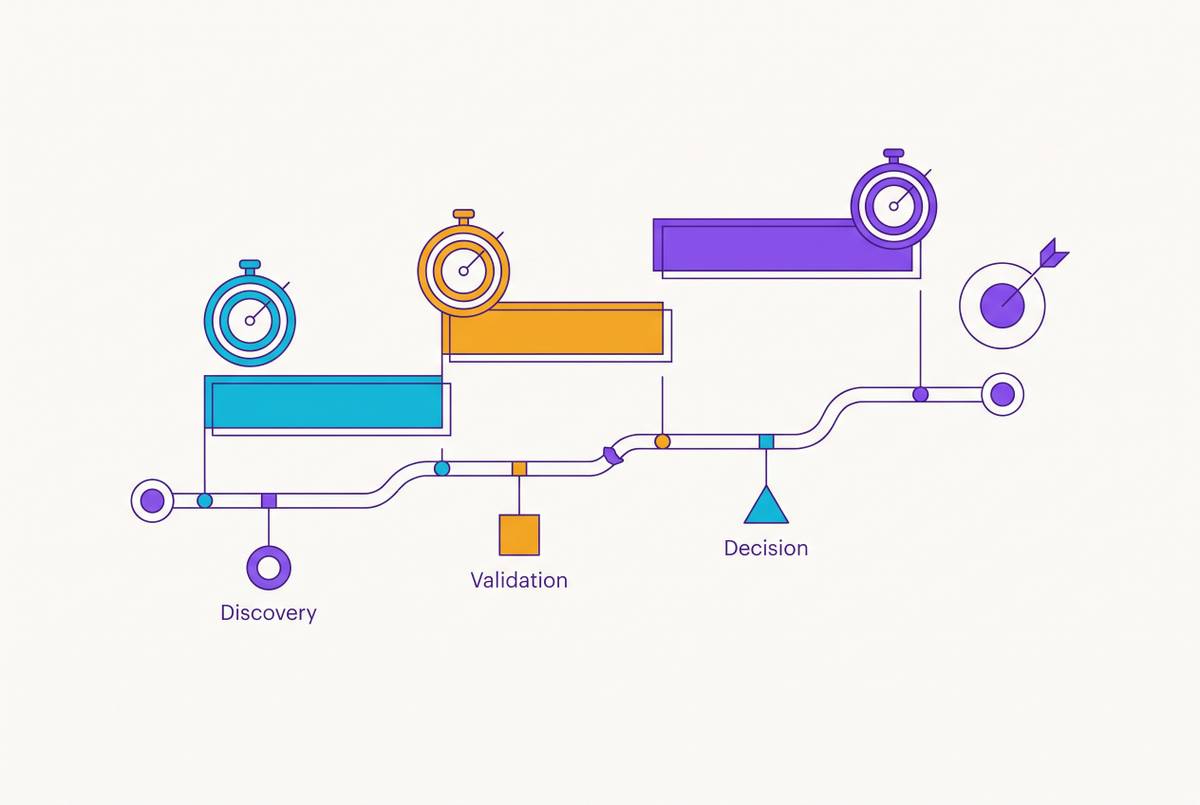
The SPICED framework (Situation, Pain, Impact, Critical Event, Decision) earns its keep because each letter answers a different design question for the demo that follows.
- Situation tells the rep which workflows and personas to show.
- Pain tells the rep which problem to lead with.
- Impact gives the business consequence to quantify in the demo narrative.
- Critical Event sets the urgency frame for the close.
- Decision tells the rep whose objections to get ahead of, and in what order.
Reps who follow a structured framework consistently outperform reps who wing it, and the gap isn't about talent. A framework produces an artifact. Improvisation produces a memory, and memories fade while artifacts don't.
Enterprise buying committees run well past a single decision-maker now, so discovery has to name each stakeholder explicitly rather than settling for whoever answered the first email. Discovery calls in enterprise motions run short, usually under an hour, and only some of those convert to a booked demo. That's a tight window. Whatever gets captured has to happen during or right after the call, not get reconstructed from memory two days later when someone finally sits down to build the deck.
The output that matters is a discovery brief naming the primary pain in the prospect's own words, the quantified impact they stated out loud, the critical event with its actual date, and a stakeholder map showing who does what in the decision. Skip that artifact and there's no real handoff. Just a verbal game of telephone between the person who ran the call and whoever builds the demo next.
How the handoff breaks down in practice
Three failure modes show up again and again, and the second one does the most damage.
The first is the notes problem. Discovery intel gets typed into a freeform CRM field, pain signals end up buried in paragraph three, and critical events never get logged as a distinct field at all. Nobody reads it before the demo gets built, because nothing forces them to.
The second, and the one that actually kills deals, is the translation problem. Often the AE who ran discovery isn't the one building the demo. A solutions engineer inherits a deal brief instead of the buyer's actual words, and re-interprets the pain through a product lens instead of the language the buyer used. "We lose a week every quarter reconciling data manually" quietly becomes "data management issues" somewhere along the way. The specificity that made the pain real just evaporates, and with it, the thing that made the call worth having in the first place. A demo built on "data management issues" could be a demo for any vendor in the category. That's the whole problem in one sentence, and it's the single most fixable failure in this entire process, because fixing it just requires writing down what the buyer actually said instead of summarizing it.
The third is committee blindness. Discovery surfaces six stakeholders, and the demo gets built for one: the champion. The CFO's ROI question never gets addressed. The IT lead's security concern never comes up. The end user's workflow anxiety goes untouched, and the demo sails right past all three of them.
None of this is a laziness problem. It's structural: nothing requires anyone to act on the intel once it's captured, the same way marketing content sits unused on a shared drive because no step in the process forces a rep to open it. By the time a prospect sits down for a demo, most of their decision is already shaped by research they did before a seller ever entered the picture. A generic demo, one that ignores what they just disclosed, only confirms the assumption they walked in with: vendors don't actually listen.
There's a timing dimension too. The longer the gap between the discovery call and the demo, the more the context rots. Deadlines move. New stakeholders show up. The champion's priorities shift, quietly, without anyone flagging it.
Building the discovery brief that demo design actually runs on
A discovery brief isn't a CRM field, and it isn't a call summary either. It's a structured document with five mandatory sections, each mapping to SPICED.
- Primary pain, verbatim. The exact phrase the prospect used. Not "workflow inefficiencies," but "we lose a week every quarter reconciling data manually."
- Quantified impact. The dollar figure, the hour count, the risk exposure the prospect actually named. If they didn't name one, getting it before the call ends is the rep's job, not an afterthought.
- Critical event. The specific deadline, and what happens if it's missed. This drives the urgency framing in the demo's close.
- Stakeholder map. Names, titles, role in the decision (champion, economic buyer, technical evaluator, skeptic), and each person's individual concern.
- Demo design instructions. Which workflows to show, which to skip, and which competitor or incumbent to position against.
Complete the brief during the call itself, or immediately after. Not three days later, once half the specifics have blurred into something safer and vaguer.
Templatizing this inside the CRM, as a required step before a demo can even be scheduled, turns it from optional documentation into a gate. That's the part most teams get backwards: they treat the brief as a nice-to-have someone fills out if there's time, instead of a checkpoint that blocks the calendar invite from going out. A brief that isn't mandatory doesn't get written. Make it optional and it dies the same death as every other "best practice" doc nobody opens. Standardization at the handoff stage compounds across every deal in the pipeline, not just the one in front of the rep today.
It also solves the SE-AE handoff cleanly. When a solutions engineer gets a brief with verbatim pain language and a real stakeholder map, the demo they build sounds like it was designed for that specific account. Because it was.
How do I use what I learned in discovery to actually build and structure my demo?
The default demo sequence, feature overview, then product tour, then pricing, is built around the product. That's backwards, and it's the single most common mistake reps make even after a strong discovery call. Discovery gives a rep everything needed to flip the order entirely, and most reps still don't.
Open with the pain the prospect named, in their language, not a generic problem statement pulled from a template. That single move signals the rep actually listened. Then show the smallest workflow that resolves that specific pain, before any broader tour, while attention is at its highest.
From there, build toward the quantified impact. Frame the demo narrative around the dollar or time figure the prospect disclosed themselves, and make the ROI visible inside the product, not tucked into a slide that shows up after the demo's already over. Sequence any additional features by stakeholder: if the IT lead cares about security and the CFO cares about cost, lead with security when the IT lead is in the room, and translate every other capability into a cost or efficiency number for the CFO's benefit. Close on the critical event, and make the timeline concrete: given the Q4 board presentation, here's what implementation looks like between now and then.
A relevant demo pulls a lot more weight than a generic one, but that lift depends entirely on relevance. A product tour that isn't answering a question the buyer actually asked doesn't get the same response, no matter how polished it looks.
Just as important is what gets left out. Features the prospect never raised as priorities should get skipped in the live demo. Showing them dilutes the narrative and signals the rep wasn't paying attention during discovery. Save the secondary capabilities for a follow-up asset instead. A demo isn't a product tour. It's a proof of concept for the specific business case the prospect described, out loud, in the discovery call.
Addressing the full buying committee, not just the champion
A demo built for the champion alone leaves the rest of the committee, the economic buyer, the technical evaluator, whoever's skeptical, with no reason to sign off. And on most enterprise deals, that's most of the room. Building for the champion alone isn't a shortcut. It's the reason deals stall in legal or procurement after everyone thought the champion had already sold it internally.
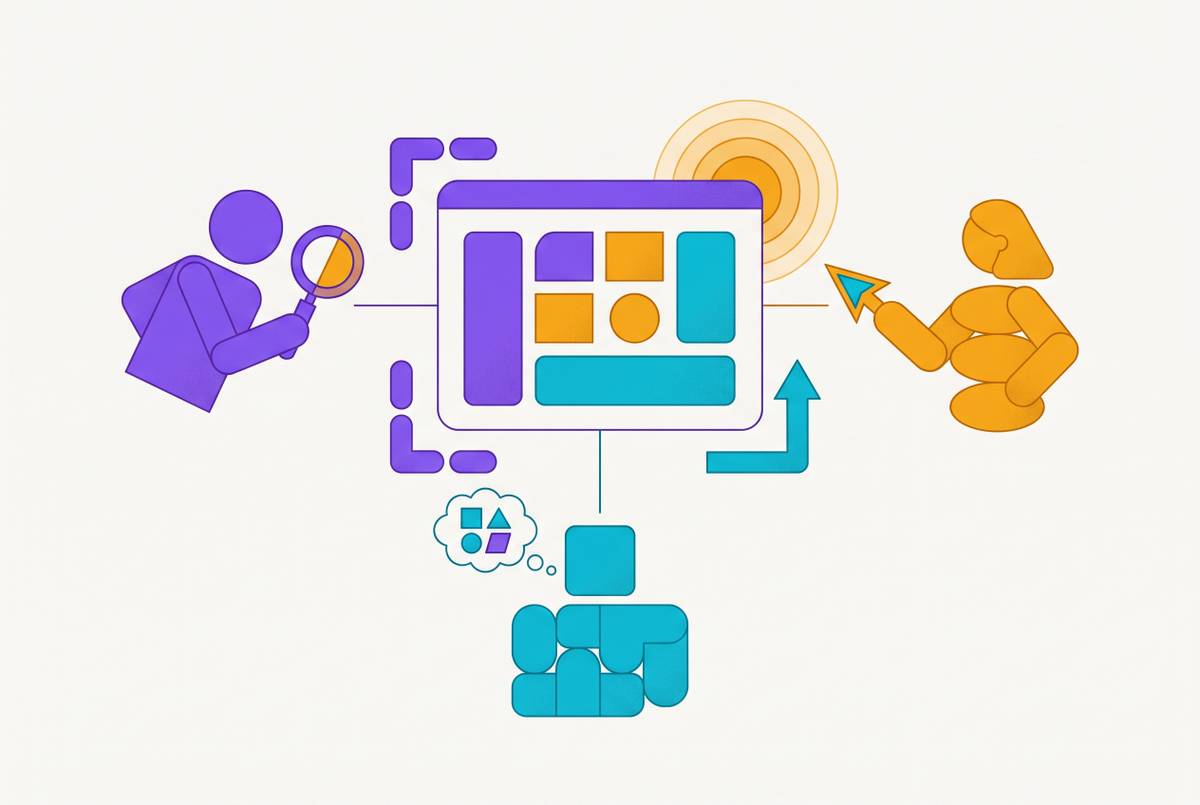
The stakeholder map from discovery becomes the demo's audience design document.
- The champion needs language they can repeat internally after the call ends. Give them lines, not just features.
- The economic buyer needs ROI expressed in business terms, tied directly to the impact figure discovery surfaced.
- The technical evaluator needs integration and security answers, ideally in a dedicated appendix or live Q&A segment rather than buried mid-flow.
- The skeptic needs their specific objection addressed, not glossed over. If discovery surfaced "we tried something like this before and it didn't stick," the demo has to answer that directly, by name.
Multi-threading isn't just a relationship tactic. It's a demo design principle: different segments of the same demo should give each stakeholder their own concrete reason to move forward, because buyers move faster when they feel personally understood, not just accounted for as part of an aggregate pain point.
If the full committee won't be on the live call, discovery should flag which stakeholders need a tailored leave-behind instead. That flag belongs in the brief itself, not in a rep's head where it'll get forgotten by Thursday.
The role of asynchronous demo assets in carrying discovery intel past the live call
Buyers spend a small fraction of their purchase journey actually interacting with vendors. The rest happens in internal meetings, Slack threads, and email chains the rep will never see.
Which means the discovery brief has to drive more than the live demo. It should shape every follow-up asset too: a short recorded walkthrough replaying the most relevant workflow, for the economic buyer who missed the live call. A one-page ROI summary built from the exact impact figure the prospect named, not a generic calculator pulled off the shelf. A stakeholder-specific leave-behind for the technical evaluator, covering the integration and security questions that actually came up in discovery.
This is where AI-assisted video production earns its place in the workflow, not as a gimmick but as a math problem. Producing a tailored three-to-five-minute walkthrough for every open deal doesn't scale under traditional production: script approval, voiceover, manual editing, a week of back-and-forth for a five-minute video. Teams need a way to customize fast without re-recording an account's demo from scratch every time a stakeholder or a deadline changes.
Zapier significantly increased booked meetings by sending interactive demos as discovery follow-ups, according to published customer data on the practice. The follow-up asset isn't a courtesy email. It's a conversion mechanism, built straight from the discovery brief, and the same infrastructure that wins the deal tends to carry straight into customer success and onboarding once the ink dries.
Making the system repeatable: tools, templates, and the handoff protocol
Three components have to work together, or the system falls apart at whichever seam gets neglected.
The discovery brief template comes first: standardized, CRM-native, mandatory before a demo can even be scheduled, with fields mapping directly to SPICED. Second is the demo design protocol, an internal checklist the SE or AE runs against the brief before touching a single slide: primary pain confirmed, impact quantified, stakeholder map reviewed, critical event built into the closing sequence. Third is the asset production workflow, a fast, repeatable way to produce tailored recordings and leave-behinds without burning hours of production time on every single deal.
That third piece matters more than it sounds like it should. For a team running dozens of active enterprise deals at once, a customized walkthrough per account through traditional video production just isn't viable at scale. What's needed instead is a workflow where a screen recording of the relevant product flow turns into a polished, narrated, branded video without a production team touching every step. That's the gap AI-assisted platforms built for software walkthroughs exist to close.
The close-rate lift from structured discovery isn't about one rep having a better call. It's about what happens when every rep on the team runs the same protocol, deal after deal, and the discipline compounds instead of resetting each time someone new joins the team.
Adoption is the tell. If most AEs aren't using an enablement asset within the first month of its launch, the asset isn't solving the problem it was built for, and the same yardstick applies to the discovery brief template itself.
Coaching has to shift accordingly. Frontline managers should review discovery briefs before the demo happens, not just call recordings after the deal has already stalled. A brief review is a pre-deal intervention. A recording review, after the fact, is a postmortem, and postmortems don't save deals still in motion.
One more piece belongs in the loop: after a deal closes or dies, the AE should annotate the brief with what the buying committee actually cared about, versus what discovery originally surfaced. That retroactive note is what makes next quarter's discovery calls sharper than this quarter's.
Measuring whether discovery-to-demo alignment is actually improving win rates
The real goal isn't a better discovery call score or a slicker demo deck taken in isolation. It's a measurable lift in the conversion rate between demo and closed-won, and that number either moves or it doesn't. Everything else is a proxy, and teams that stop at the proxy metrics are fooling themselves.
Discovery brief completion rate is the simplest process metric worth tracking: what percentage of demos actually had a completed brief behind them before the call happened. If that number is low, nothing downstream can be trusted, because the whole system depends on the brief existing in the first place.
Beyond that, deal teams should watch whether demo-to-next-step conversion improves for briefed deals versus unbriefed ones, whether stakeholder-specific follow-up assets get opened and shared inside the buyer's own organization, and whether win rates on multi-stakeholder deals close the gap with single-threaded ones over time. None of these numbers move in a quarter. They move over several quarters, as the discipline becomes habit instead of initiative.
The alignment between discovery and demo was never the hard part conceptually. It's a handoff problem, and handoff problems get solved with protocol, not effort. The teams that build the brief, enforce the gate, and sequence the demo around what discovery actually surfaced aren't doing anything mysterious. They're just refusing to let the intelligence die in a notes field nobody reopens.
Sources
- Sales Enablement Best Practices for Effective Selling — TechClass
- Discovery calls: The definitive guide for sales reps
- Enterprise Sales Strategy: A Complete 2026 Guide
- How to Build a Successful Sales Discovery Process in 2025-26 | Pepsales AI
- pepsales.ai
- Sales Demo Best Practices: How to Close More Deals in 2026
- tractioncomplete.com
- Discovery Call to Demo: Mastering the Transition to Accelerate Sales Success - My Framer Site