AI-Personalized Demo Experiences at Scale in SaaS GTM
Personalized AI demos that adapt to each buyer's role can reach prospects before sales ever does.
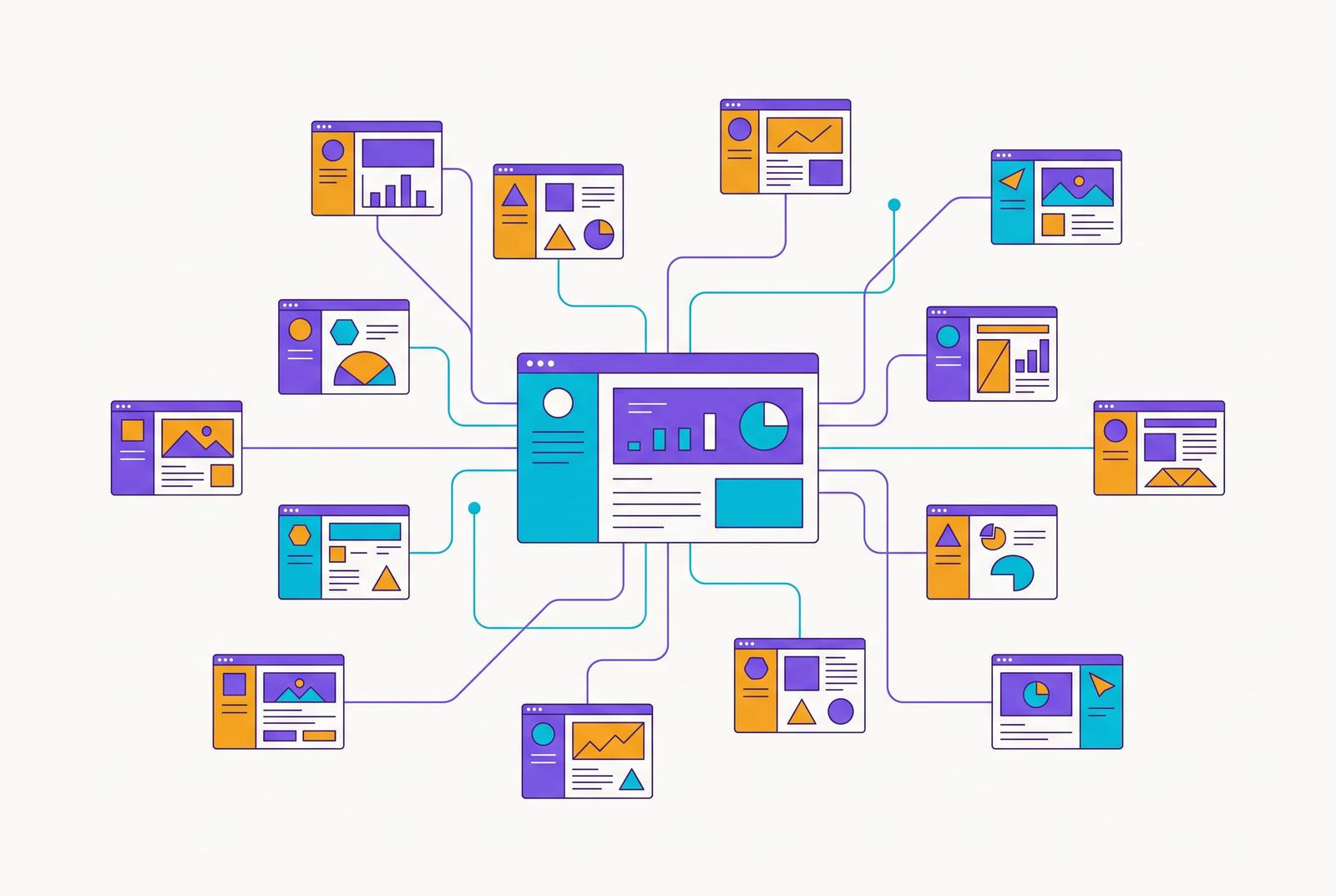
Buyers finish roughly 61% of their evaluation before a vendor ever gets a phone call or a video meeting invite. That number rewrites what a demo has to do in 2026: it has to teach, qualify, and differentiate on its own, with no rep in the room to fill gaps or read the room. Since 85% to 95% of eventual purchases trace back to whatever shortlist the buyer formed on day one, a product that isn't experienced before that shortlist locks stands a poor chance of getting a second look.
The demo category has moved through three phases to get here. First came the live, rep-led call. Then came the recorded screen capture sent as a follow-up. Both are now the price of entry, not a way to stand out, and most teams are still budgeting for them like they're a differentiator. They're not. The wave separating winners from everyone else right now is AI-generated, buyer-specific product storytelling: demos that shift shape based on who's watching, what role they hold, and where they sit in the buying process. A generic walkthrough narrates a generic product, and most buyers can tell within thirty seconds. What a buyer evaluating software in 2026 actually needs is a story shaped around their job, their specific pain, and the exact question they showed up with.
What "personalized at scale" means in a demo context
Most "personalized" demo programs fail for one reason: nobody picked a level. Personalization runs on a spectrum with three distinct tiers, and teams that try to do all three at once, or worse, none of them on purpose, end up with a demo that's personalized in name only.
Segment-level is the floor. Everyone watching gets the same demo, but the narration or chapter order changes based on role. A CFO evaluating a finance tool sees a path built around cost and risk. An IT buyer evaluating the same tool sees a path built around security and integration. Nothing about the underlying demo changes, just the sequencing and the emphasis.
Account-level goes further, and it's what most enterprise sales teams actually mean when they say "personalized demo," even though it's a rung below what the term implies. The prospect's company name shows up in the demo itself, the use-case framing matches their industry, and only the feature subset relevant to their situation gets surfaced.
Adaptive, real-time personalization sits at the top, and it remains the most technically demanding tier to execute well. Content shifts based on how the viewer behaves in the moment, what time of day they're watching, even inferred likelihood to buy. Chasing this tier before nailing account-level is how teams burn a production budget on a feature their buyers never notice.
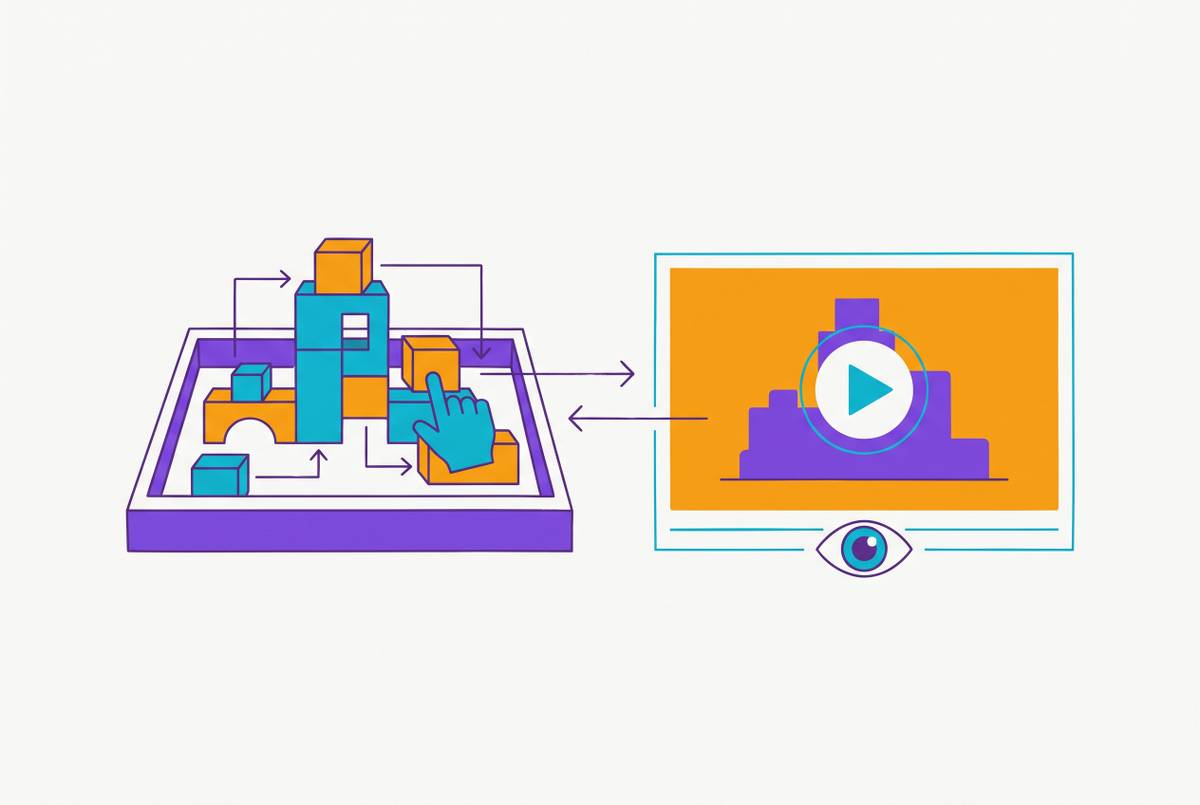
The format has to match the tier. AI-generated video renders fast but locks in place once it's done rendering, which makes it a natural fit for segment-level work; trying to force adaptive behavior out of a rendered video is a losing bet. Interactive click-throughs bake branching paths into the build itself, so a viewer's role or industry determines what they see next, and every click feeds analytics back to sales. That's the right tool for account-level work. A hybrid approach layers AI narration onto a click-through, pairing production speed with the qualification signal that only comes from someone actually clicking through choices. Live sandboxes sit at the far end, reserved for late-funnel enterprise deals where the cost of building a custom environment is justified by deal size, and nowhere else.
Without AI, personalization means choosing between a handful of hand-built custom demos or hiring a production team large enough to keep up with demand. That's why "at scale" is the hard part, not the personalization itself. AI doesn't eliminate the production work. It changes how much of it a team has to do by hand, and that's the entire gap between a handful of demos a quarter and a volume that would otherwise require a much larger team.
The AI video production layer: turning a screen capture into a buyer-specific story
Before AI entered the picture, producing a polished demo video took roughly two hours of editing work. Fine if the product ships quarterly. Untenable if it ships weekly, which is how most SaaS teams operate now. A demo video that's two sprints out of date isn't a minor inconvenience, it's actively misleading a buyer about what they're evaluating, and that's a worse outcome than having no video.
The fix is a standardized source-capture approach. Record the product flow once, then let AI regenerate the voiceover, the motion graphics, the captions, and the calls to action every time a feature changes, without touching the original recording. Personalization becomes a rendering decision instead of a production restart, closer to changing a setting than rebuilding an asset from scratch.
Picking the wrong tool for the job wastes a full production cycle, and the tools genuinely don't overlap as much as their marketing suggests.
HeyGen focuses on high-fidelity AI avatars. It's strongest where a demo needs a believable human presence on screen, spokesperson-style content where trust depends on seeing a face.
Tavus is built around personalized video generation at scale. It's aimed at teams running outbound that already works and need to multiply it, changing the unit economics of one-to-one video when the bottleneck is production capacity, not demand.
InVideo AI generates full videos, stock footage, voiceover, captions, and transitions included, from a plain-language prompt. It's built for volume: teams that need many videos fast, not one polished flagship demo.
Pictory takes existing content assets and turns them into professional video, applying consistent branding automatically and updating assets without a re-shoot. Useful for teams sitting on a backlog of webinars, documentation, or blog content that's never been turned into video.
Opus Clip and Submagic solve a narrower but real problem: repurposing. Both pull clips out of webinars, conference recordings, or podcast archives, producing a burst of content that feeds social, sales enablement, and ad creative all at once, from footage that already exists.
AI-powered documentation platforms, some now offering translation across multiple languages, solve the parallel problem of written, step-by-step content. Teams that need both a video asset and a documentation asset from the same screen capture don't have to run two separate workflows to get there, which is a real production hour saved, not a hypothetical one.
The interactive demo layer: building personalization into the experience itself
Interactive demo platforms work fundamentally differently from AI video. Rather than generating a video from a prompt, they capture the actual HTML and CSS of the product. The result doesn't look like a recording. It feels like using the real software, because in a meaningful sense it is the real software, just captured and replayed.
Three formats dominate this layer, and confusing them is the most common early mistake teams make when they buy this category of tool. Guided walk-throughs lead a viewer step by step through a fixed path. Live overlays sit on top of a real environment, adding instruction without replacing the underlying product. Fully cloned sandbox replicas rebuild the environment entirely, letting a prospect click around freely rather than follow a script.
The personalization mechanics inside this layer have become standard across enterprise GTM programs. Branching logic adapts the demo to a viewer's role or industry at build time. Dynamic variables swap in a company name, a use-case framing, or a specific feature subset depending on who's viewing. Custom trackable share links let a rep send a unique demo link to each account and know exactly who opened it. Engagement analytics, completion rate, step drop-off, which hotspots get replayed, feed straight back to sales as intent signals, turning the demo into a lead-scoring input instead of just a marketing asset.
A buyer who navigates straight to the three features relevant to their job doesn't have to sit through fifteen minutes of generic walkthrough hoping to find the relevant part. The demo does the filtering the buyer would otherwise have to do alone. Less friction between question and answer means a faster "this would work for us," and that's the whole mechanism behind why interactive formats consistently beat static video on conversion.
Where personalized demos fit inside the full GTM motion
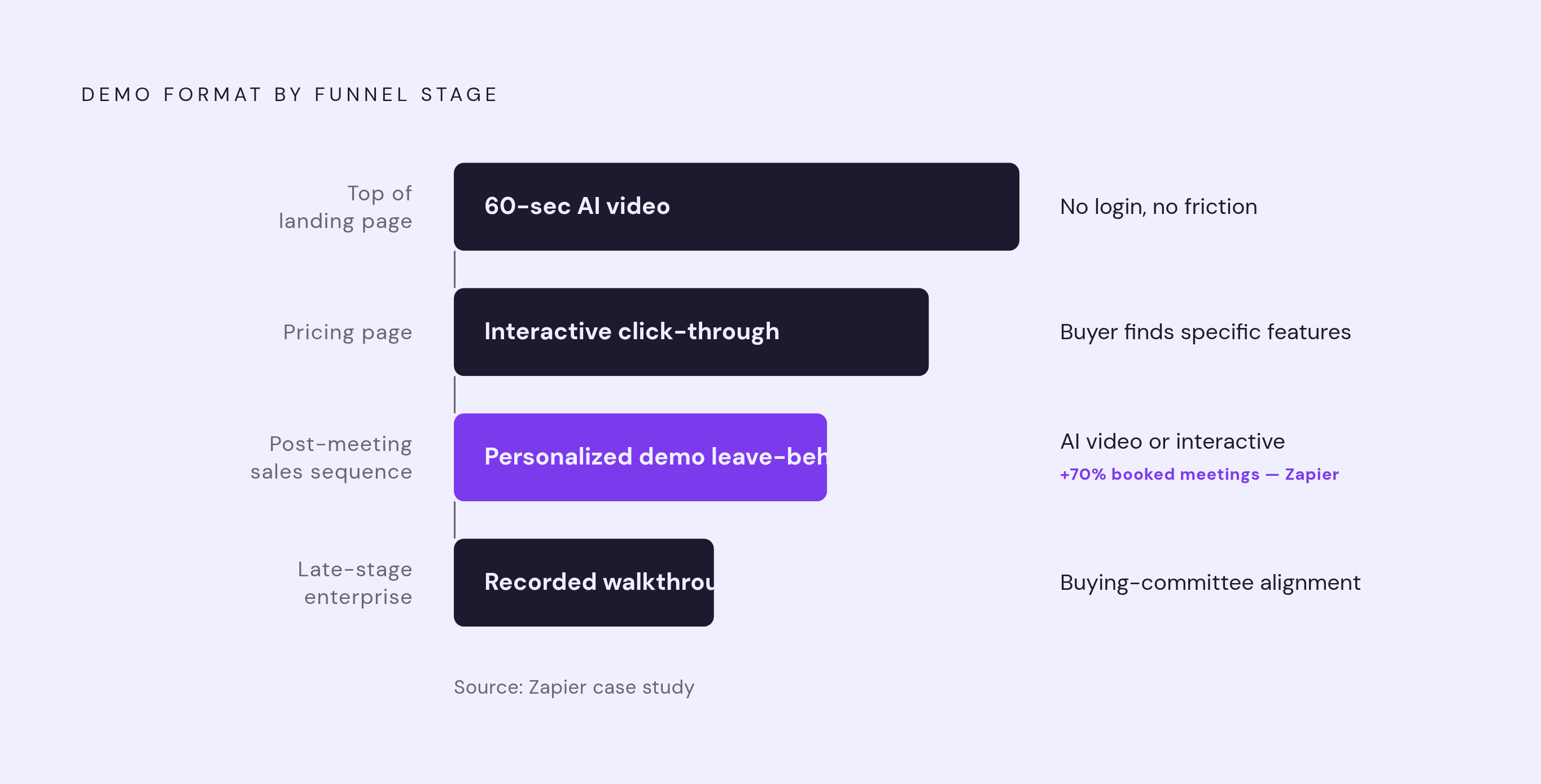
Format has to match funnel stage, full stop. Treating every demo the same regardless of where a buyer stands is the single most common mistake in how teams deploy these tools, and it wastes both the buyer's attention and the sales team's production budget at once.
At the top of a landing page, a 60-second AI video demo is the right call for first-touch visitors arriving from paid or organic search. No login, no friction, just an immediate signal of what the product does.
On the pricing page, buyers have moved past curiosity. They're asking "can it do X" questions with real specificity, and an interactive click-through answers those better than a video ever will, because the buyer can go find the exact feature in question instead of waiting for it to show up on screen.
In a sales sequence, a personalized AI video or interactive demo works as a leave-behind after a meeting, replacing the PDF one-pager that used to get sent and immediately ignored. Zapier's sales team reported a 70% jump in booked meetings after switching from PDF leave-behinds to interactive demos: a concrete example of what happens when the follow-up asset lets a prospect do something instead of just read something.
Late-stage enterprise deals still call for a live, recorded walkthrough or a full sandbox. Buying committees need alignment, and a human answering questions in real time earns its place at that stage in a way no automated asset replaces. Anyone arguing interactive demos kill the need for live selling at the enterprise level hasn't sat through a committee deal.
The demo also works as an activation tool. A prospect who self-navigates a personalized interactive demo before signing up shows up to onboarding already understanding the product's shape, and that compresses time-to-value, because the education work that normally happens during onboarding already happened during evaluation.
High Alpha's 2026 outlook frames where this is heading: generic GTM strategy stops working as AI-native products become the baseline expectation rather than a differentiator. The edge moves to how precisely a company tailors messaging, content, demos, and onboarding to narrow, specific segments. The pitch changes from "our product has AI" to "our AI personalizes your specific outcome, in your specific industry, by a specific number." That's a harder claim to make, and a much harder one to fake.
Customer education and onboarding as the post-sale extension of the personalized demo system
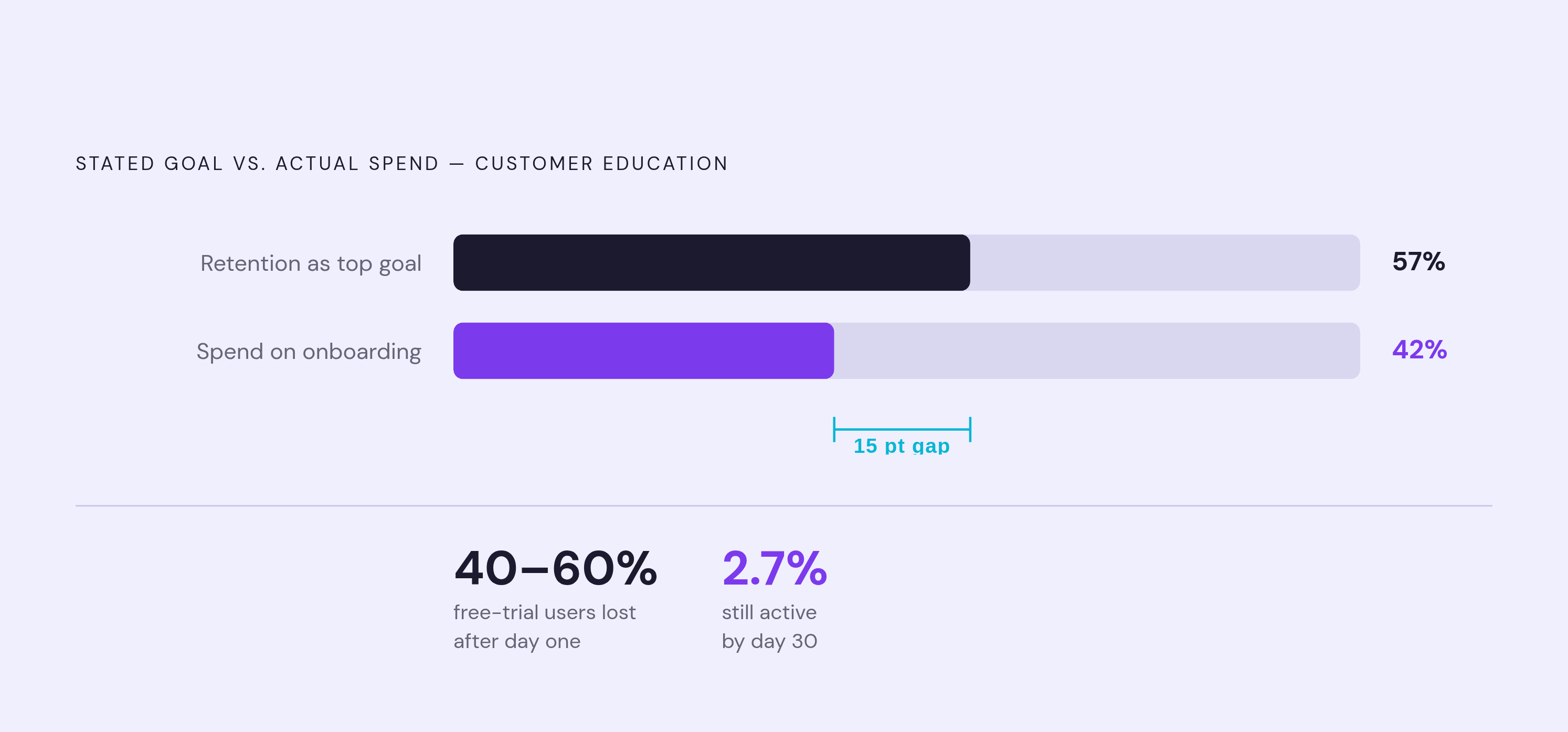
None of this matters if onboarding can't hold up its end. Between 40% and 60% of users who sign up for a free trial use the product once and never come back, and only 2.7% are still active by day 30. A personalized demo that gets someone excited enough to sign up sets an expectation, and onboarding either meets that expectation or breaks it inside the first week.
Purchase regret backs this up from a different angle. Close to 59% of SaaS buyers say they regret at least one software purchase their company made in the past 18 months, and that regret points back to what happens after the sale. The sale wasn't the failure. The onboarding was, and no amount of demo polish upstream fixes a broken week one.
The industry has started responding, at least on paper. Formal customer education programs have gone from something roughly 62% of SaaS companies invested in to something 87% invest in now, a jump that reflects how seriously the retention math has landed on people's desks.
The budget hasn't caught up to the stated priority, and that gap is the real story. The 2026 State of Customer Education study from Absorb and Lighthouse Research & Advisory found that 57% of programs name retention as their top goal, yet only 42% of spending actually goes toward onboarding, the exact stage where retention gets decided. Fifteen points of daylight between what teams say matters most and where the money actually goes, and that's not a rounding error. A demo that adapts to a buyer's role and use case shouldn't stop adapting the moment the contract gets signed. That 15-point gap appears every year in companies that split acquisition and retention into two budgets run by two teams that don't talk, because the same personalization logic that got someone to say yes is what keeps them from disappearing thirty days later.