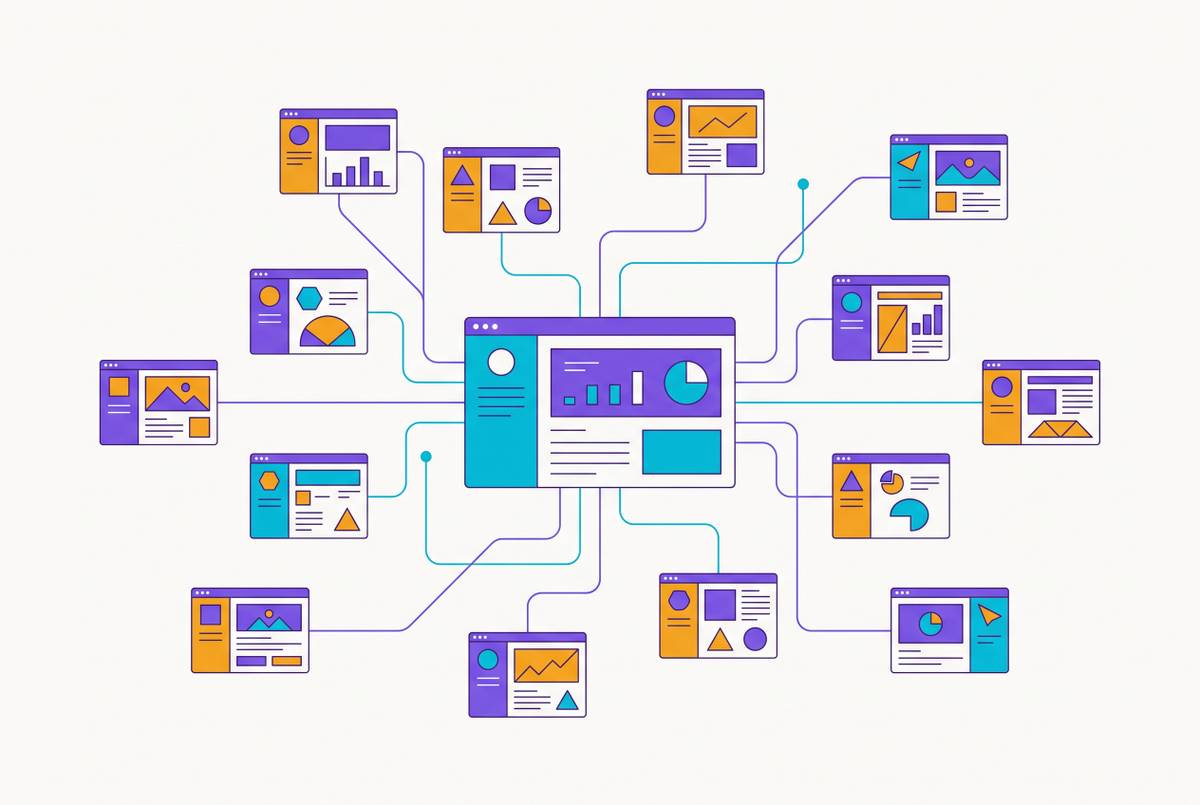
Product-Led Growth Motion and the Role of the Embedded Demo
Embedded demos accelerate product discovery before visitors commit their email or time.
Product-led growth stopped being the scrappy alternative to enterprise sales a while back. It's the default now: 91% of B2B SaaS companies above $50M ARR run PLG strategies, and adoption at that scale shows no sign of reversing. A model that's already won this decisively doesn't need more converts. It needs teams that understand where it breaks, because most of them don't.
The economics explain why everyone jumped on board. PLG companies post 50% higher revenue growth while spending 39% less on sales and marketing, and 83% hit $100M ARR in under five years, a pace that would have been unthinkable under traditional sales-led timelines. The mechanism is simple to state and brutal to execute well: the product replaces the rep during the early funnel. Instead of a human explaining, qualifying, and persuading across three or four calls, the prospect explains the product to itself. That changes what the product owes the visitor. A form-gated demo request, scheduled a week out, run by someone reading off a deck, fails at exactly the moment it's supposed to succeed. Buyers aren't shy about saying so: 80% of SaaS buyers prefer self-service product trials over sales demos.
Where the PLG funnel breaks, the activation gap
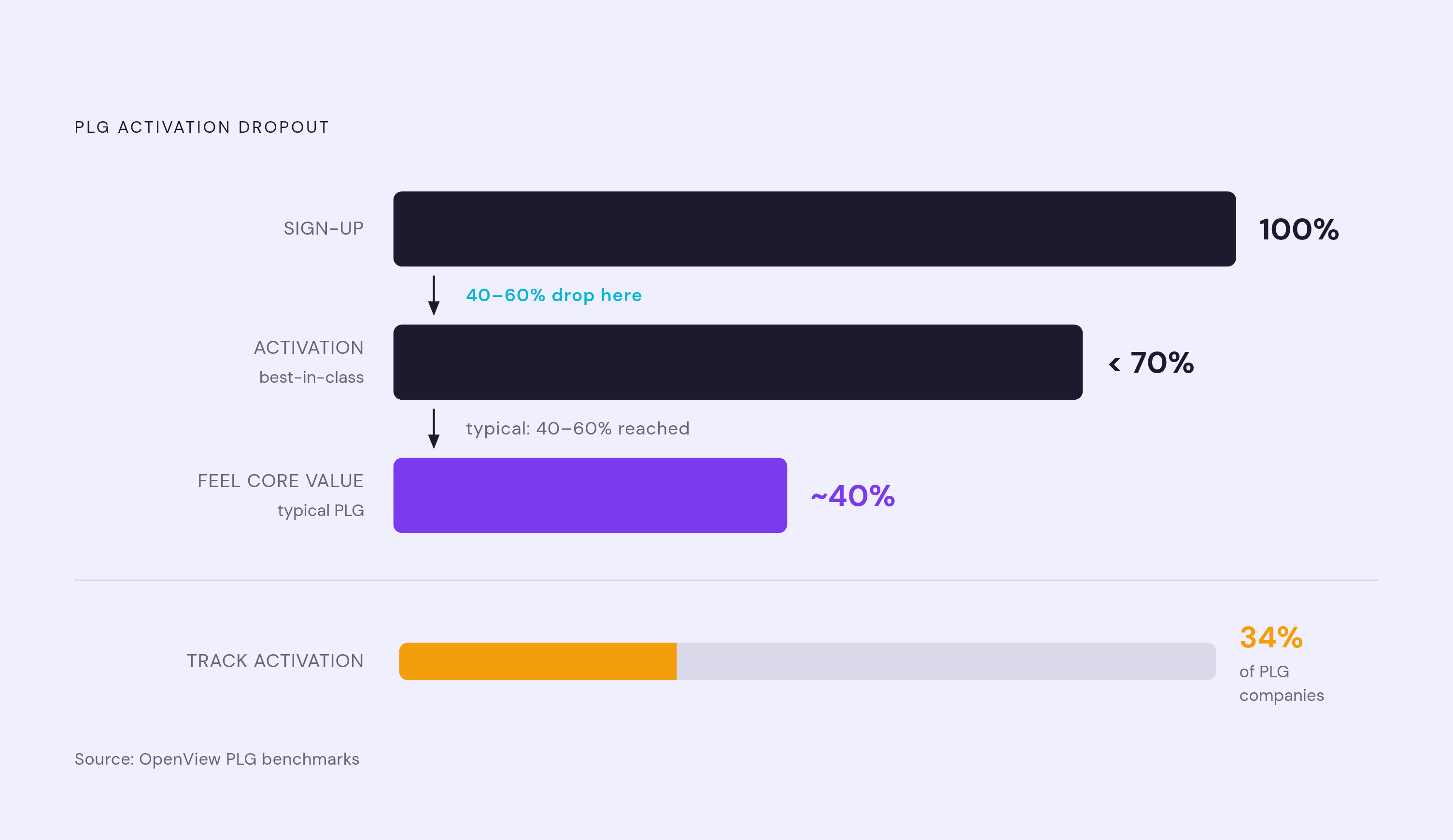
Everyone assumes the funnel breaks at the top, with traffic, or at the bottom, with pricing. Wrong on both counts. Somewhere between 40% and 60% of free users in a typical PLG funnel never reach activation, the point where they actually feel the core value the product exists to deliver. OpenView calls these users zombies. They signed up. They never came back to life.
The uncomfortable part is that even best-in-class PLG companies only push activation rates past 70%, meaning a substantial share of free users still never arrive. So activation isn't a solved problem even for the companies doing everything else right, and only 34% of PLG companies bother to track it as a metric at all. Most companies are blind to a problem they aren't even measuring. The postmortem, when it happens, blames the wrong thing.
It's a time-to-value problem, full stop. Users don't leave because the product is bad. They leave because they never got far enough in to find out, and nothing about a bad landing page or a confusing pricing tier explains that as well as a demo that never delivers the moment it was built to deliver.
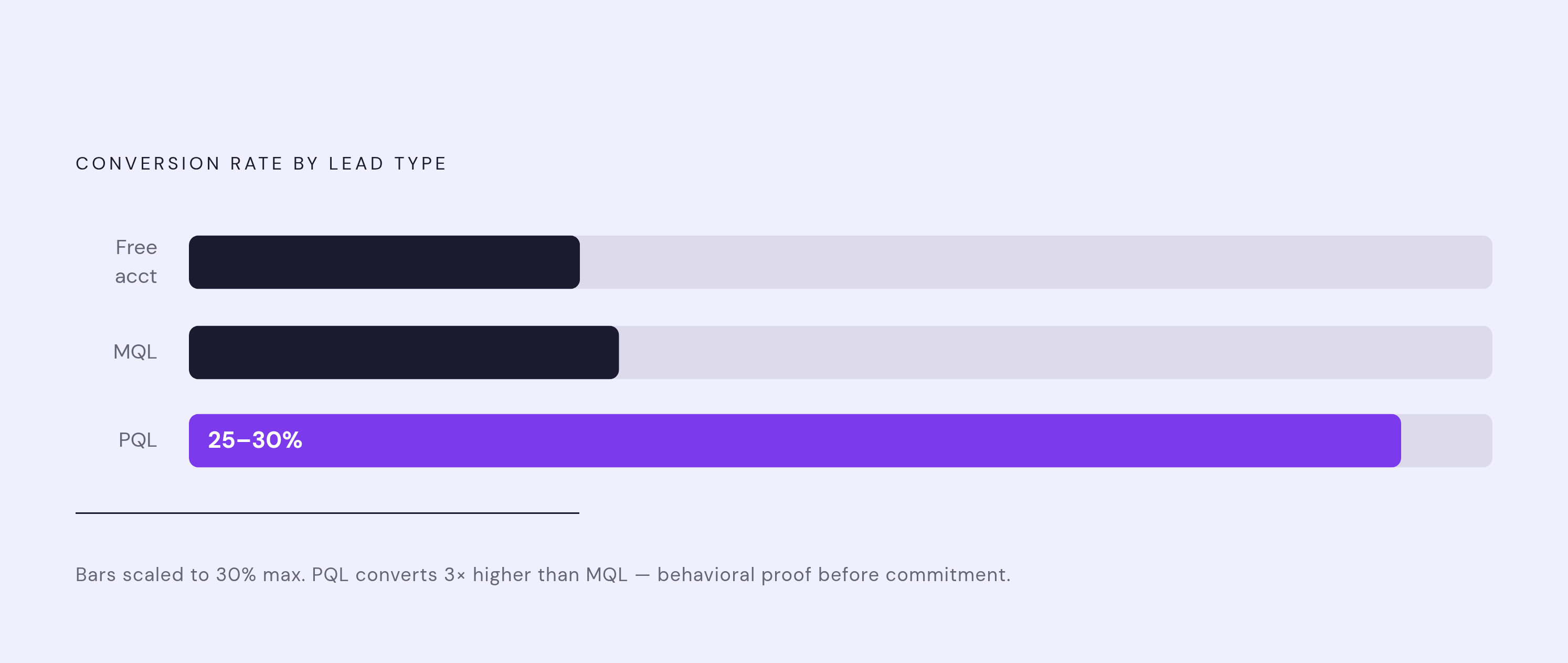
Look at conversion by lead type and the gap turns concrete. Products that qualify leads through actual usage, PQLs, convert at 25% to 30%. Leads qualified the traditional marketing way, MQLs, convert at 5% to 10%. The entire gap comes down to whether the person felt the product's value before anyone asked them to commit to anything. Everything downstream of that question is a footnote.
What an embedded demo is and how it differs from a product tour or a live demo
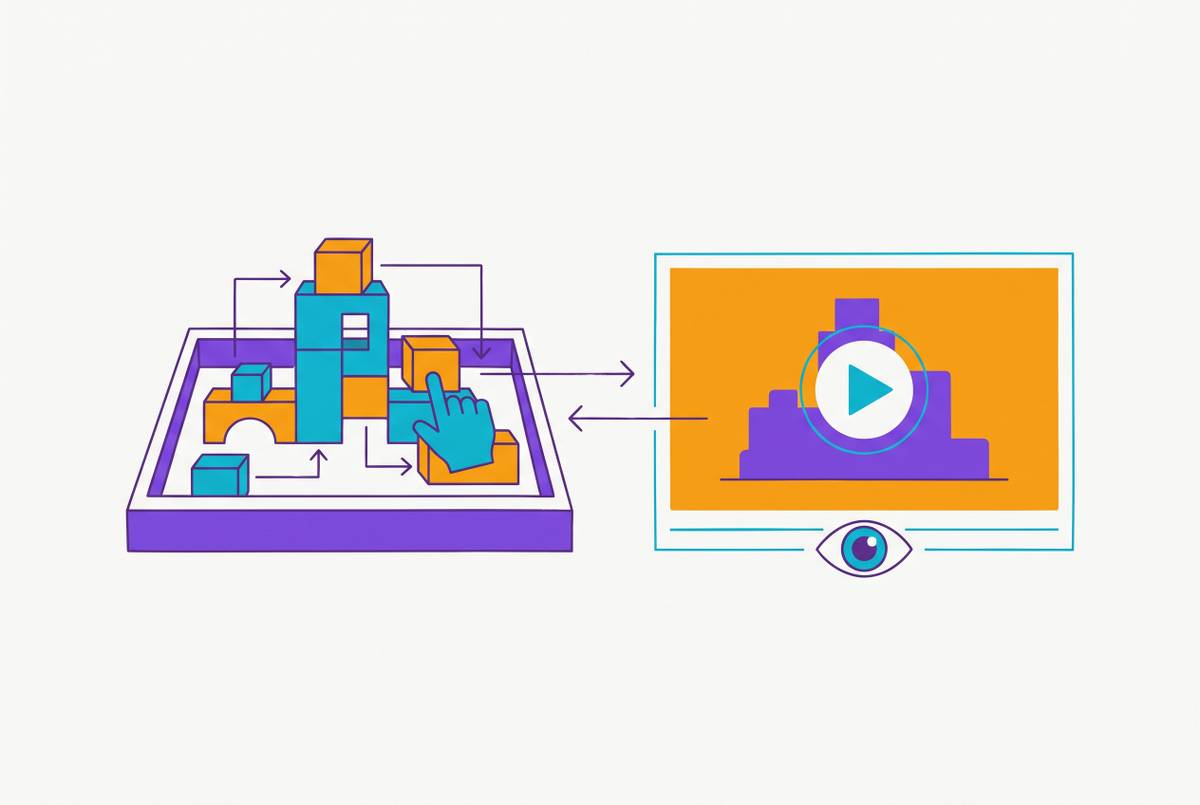
An embedded demo is an interactive product experience built directly into a webpage, a pricing page, a homepage hero, a feature page, that a visitor clicks through without signing up, booking a call, or talking to a rep. No gate. No wait.
The confusion with adjacent formats costs teams real conversion, so the lines need to be drawn hard. A live demo is rep-controlled and scheduled, and it demands the prospect commit time and identity before they've seen anything. That's fine for someone deep in a sales conversation. It's useless for an anonymous visitor still deciding if they care. A product tour appears only after signup, walking a new user through a linear sequence once they're already inside; it's a post-gate experience by definition. An explainer video sits in between: often well produced, but passive. The viewer watches. Nobody touches anything. Walnut's platform data shows that sales-led interactive demo programs produce 2x the conversion lift per demo sent compared to ungated marketing placements.
The embedded demo is none of those three. It runs pre-registration, self-directed, interactive, and the visitor sets the pace, picks the sequence, decides how deep to go. It's a different category of thing from a minor variation on a tour. It's a different category of thing, built to work on anonymous traffic so the prospect never has to hand over an email before getting a real feel for the product.
Something quieter happens through the mechanics, too. Every click inside the demo is a small commitment, and string enough of those together and the visitor has effectively run their own sales process, on their own terms. Resistance drops because nobody pushed them through someone else's script.
The embedded demo's function at each stage of the PLG funnel
At the top of the funnel, on a homepage or feature page, the embedded demo turns cold curiosity into something closer to proof. Most people landing on a homepage are just browsing, and letting the product show itself, instead of making claims about itself, raises intent before a single word of copy gets read. Every interaction along the way (which flow a visitor opens, where they pause, where they bail) becomes behavioral data that later flags which visitors look like PQLs.
Mid-funnel is where the numbers sharpen. Walnut's data on an HR tech company found that swapping a gated demo request form for an ungated interactive demo on the pricing page moved conversion from 2.1% to 3.8%, an 81% lift. Lead quality rose too, since prospects arrived already educated instead of blind. Demos placed at the decision stage outperform demos placed at the awareness stage by a wide margin, per Walnut's benchmark data, which tracks: a visitor closer to buying gets more out of seeing the specific thing they need.
The decision stage carries its own separate problem: the buying committee. B2B buying committees routinely involve multiple stakeholders, and no rep has time to run a live demo for every one of them. An embedded demo solves that by being shareable and asynchronous, running itself for whichever stakeholder opens the link, whenever they open it.
Post-signup, the same interactive format doesn't retire. It gets repurposed as in-app onboarding. Instead of walking every new user through a generic checklist, the sequence adapts to what that specific user does, getting each one to their own aha moment faster.
The personalization layer that separates high-converting embedded demos from generic ones
Teams personalizing more than half their demos see conversion rates 40% higher than teams running one flow for everybody, per Walnut's platform data. That's close to half the outcome, decided by whether the demo knows who's looking at it.
Personalization takes a few concrete forms. Role-based flows send a developer down a different path than a finance director, even inside the same product, because the two of them care about entirely different things. Use-case branching lets the visitor pick their problem before the demo starts, then shows only the parts of the product relevant to that problem. Behavioral adaptation goes further: AI-driven onboarding reads early signals (what a user clicks first, whether they try a collaborative feature, which screen they return to) and reshapes the sequence in response.
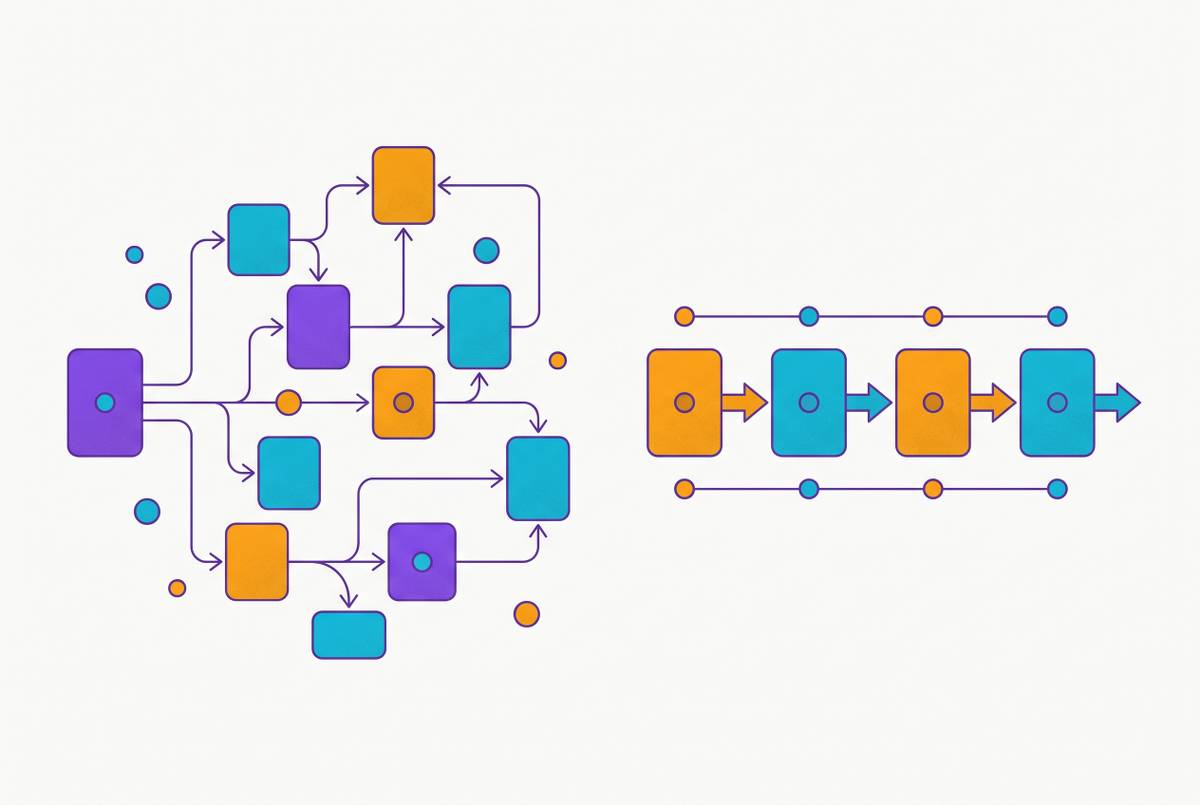
Generic demos fail for the same reason every single time. A single linear flow, shown to every visitor regardless of role or use case, forces people through steps that don't apply to them, and every irrelevant step is a chance to drop off before reaching the thing that actually matters to them.
CRM-integrated demo analytics close the loop here, connecting demo engagement to actual pipeline and closed-won deals, so teams see which flows correlate with real PQL conversion instead of guessed conversion. The 40% lift is a floor, not a ceiling, for teams willing to build past a single role-based branch. Treating personalization as a nice-to-have, rather than the core mechanism that makes the demo work at all, is the single most common mistake in this category.
What makes a visitor become a product-qualified lead rather than a bounce
A PQL is a visitor whose behavior inside the product signals real intent: someone who went deep enough to show genuine fit, not just curiosity passing through.
The embedded demo generates exactly that signal without ever requiring a form. Which flows did the visitor complete? How long did they spend? Which features did they explore, and did they try configuring anything or attempt something collaborative? All of that is behavioral evidence, collected before anyone asked for an email address.
A handful of signals deserve close scoring. Depth of interaction matters most: did the visitor finish a whole flow, or bail two steps in? Feature affinity comes next, meaning which capability they lingered on or clicked back into more than once. Self-identification is the subtle one, whether a visitor typed their own company name or workflow into a demo field, a small but telling sign they were already picturing themselves using the thing. Return visits close the list: a visitor who comes back to the demo on a second session has, without saying a word, raised their own hand.
The dollar value appears in the conversion split. Across PLG models generally, about 9% of free accounts convert to paid. Products running on PQL frameworks convert at 25% to 30%, against 5% to 10% for pipelines built on MQLs. That gap is what collecting behavioral evidence before asking for commitment is actually worth.
Free trial structure sits right next to this decision, and the tradeoff there is stark. Trials that skip the credit card convert at 18% to 25%. Trials that require one convert much higher, 49% to 60%, but cut trial volume by 60% to 70%, since most people won't hand over a card just to poke around. Teams keep treating this as an either-or decision, and it isn't one. The embedded demo threads the needle by raising the quality of no-card signups without forcing the friction a credit card gate creates. Put the demo in front of the trial, and whether to gate signups behind a credit card loses most of its stakes either way.
Building demo content that reaches the aha moment before the visitor leaves
The window is narrow. Nobody's committed to anything, and the exit is one click away at every second, so the flow has to reach real value fast, not after a tour of every feature the product has.
Lead with the outcome the visitor wants, ahead of the interface they'll need to learn to get there. Cut the number of actions required before that first value moment, since every extra click before value is felt is a chance to lose someone. Use progressive disclosure, meaning depth is available for the visitor who wants to dig in, but never required for the one who just needs the core signal. And annotate with intent: tooltips should explain why something matters to the visitor's specific situation, not describe mechanically what a button does.
The script carries as much weight as the interaction design. A voiceover or caption layer guiding someone through an interactive demo does what a rep's framing does on a live call: it tells the visitor what to notice and why. AI-assisted tools for script cleanup and voiceover generation have lowered that bar considerably, letting teams without a dedicated video producer put out something polished.
Video and interactive flows work better paired than either does alone. Research consistently shows customers value video content during onboarding, so a short video introduction alongside an interactive flow gives visitors a choice in how deep they go.
None of this stays finished. A demo built on static screenshots goes stale the moment the product changes, and products change constantly. Teams need to plan for update cycles from day one or build on tools that keep demo content current without turning into a full-time job. Customer education, product marketing, and sales enablement teams increasingly own this content without a video production team behind them, and the tools that make that realistic aren't a footnote to the strategy. They're part of it.
Embedded demos' fit into the broader self-serve acquisition stack
The embedded demo doesn't work alone. It sits inside a stack that includes free trials or freemium tiers, in-app onboarding, in-app guides, ROI calculators, comparison content, and human sales assist that kicks in once PQL signals appear. Its specific job is the pre-registration layer: qualifying anonymous traffic before anything else in the stack touches the visitor.
PLG doesn't remove sales from the picture. It changes when sales shows up and what has to happen before it does. Cursor, built by Anysphere, crossed $500M in annual recurring revenue by mid-2025 and reached $2B by February 2026, without enterprise sales reps until well past the $200M mark. It's proof of how far self-serve carries a company before a human needs to enter the room, not an outlier story. It's proof of how far self-serve carries a company before a human needs to enter the room.
Datadog runs a hybrid version of the same idea. Developers pick up one monitoring product on a free or cheap tier, then expand into the broader platform over time. That motion produced $3.4B in fiscal year 2025 revenue, up 28% year-over-year, with 603 customers at $1M-plus in ARR by the third quarter of 2025, up from 462 a year before. The embedded demo drives the land. Expansion comes later, from in-product experience and sales stepping in once PQL signals justify it.
Customer education keeps paying off after the sale closes, too. Companies running automated onboarding workflows cut churn by 25%, and strong education content alone reduces onboarding-related churn by 15% to 20%. The investment in demo content doesn't stop earning once someone converts. It raises retention right alongside acquisition.
The metrics that tell you whether your embedded demo is doing its job
Most teams are flying with half the instrument panel dark. They track page views and form fills, not what happens inside the demo itself, so they watch traffic arrive and leads convert with no visibility into what actually connects the two.
That's the same blind spot from the activation gap, recurring under a different name. Only 34% of PLG companies track activation at all, and the identical gap occurs around embedded demo engagement specifically. A team that doesn't measure which flows get completed, where visitors drop, and which interactions correlate with pipeline can't tell a high-performing demo from a mediocre one. Guessing isn't a strategy here, no matter how good the demo looks on a screen share. Instrument the thing, then look at what it actually tells you.
Sources
- Interactive Demos & B2B Conversion Rates | Walnut
- Product-Led Growth Statistics for 2026: Adoption, Free Trial Conversion, PQL Benchmarks, NRR, CAC, Onboarding, and PLG vs. Sales-Led Data
- 20 Product-Led Growth Statistics and Benchmarks for 2026
- PLG in 2026: Product-Led Growth Evolves Into Full-Stack GTM