Sandbox Environments Versus Video Demos for Technical Buyers
Video demos prove workflow fast; sandboxes let buyers validate their own specific needs.
Sandbox environments and video demos get treated like competitors in most GTM playbooks, but that framing is wrong. They do different jobs at different moments in a buyer's evaluation, and picking the wrong one at the wrong time costs deals. Gartner has found that buyers spend just 17% of their purchasing journey actually talking to vendors, and HBR reports 81% of customers now try to solve their own problems before they ever engage a rep. By the time a technical buyer lands on your demo content, they've already framed their criteria, and your format either meets them where they are or tells them, loudly, that you don't understand their job.
Most eventual purchases come from a shortlist buyers build before any vendor contact happens. Choosing the right format lands you on that shortlist. That makes video demos and sandbox environments something more than sales collateral. For a huge share of buyers, they're the evaluation itself. Which format serves which moment in a self-directed journey is what matters. It's which format serves which moment in a self-directed journey.
What each format is and what job it performs
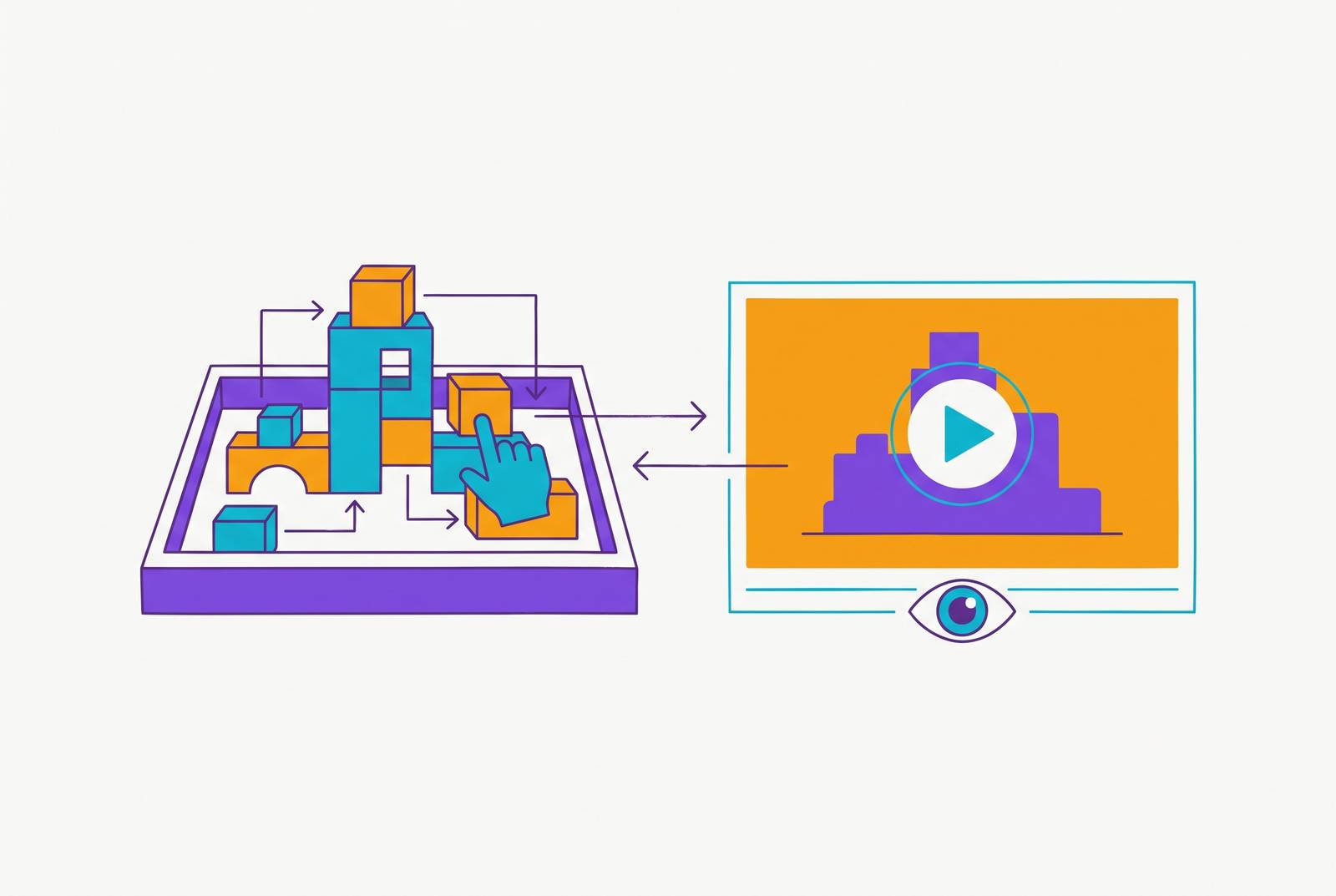
A video demo is produced and linear. AI-generated, human-recorded, or screen-captured, it narrates a workflow and shows it happening, and the viewer never has to touch anything. A sandbox environment flips that entirely: it's an isolated replica of the product where the prospect drives, testing configurations and watching outcomes unfold without going anywhere near live systems or real data.
There's a middle category too. Interactive or click-through demos are built from screenshots or HTML captures with guided hotspots. They direct the path the way a video does, but they add a tactile layer, something for the buyer's hands to do. And then there's the newest entrant: the agentic demo. An AI agent navigates the interface in real time, holds an actual two-way conversation with the prospect, and adjusts the walkthrough based on what gets asked. It's neither a recording nor a free-explore sandbox. It is something else than a recording or a free-explore sandbox.
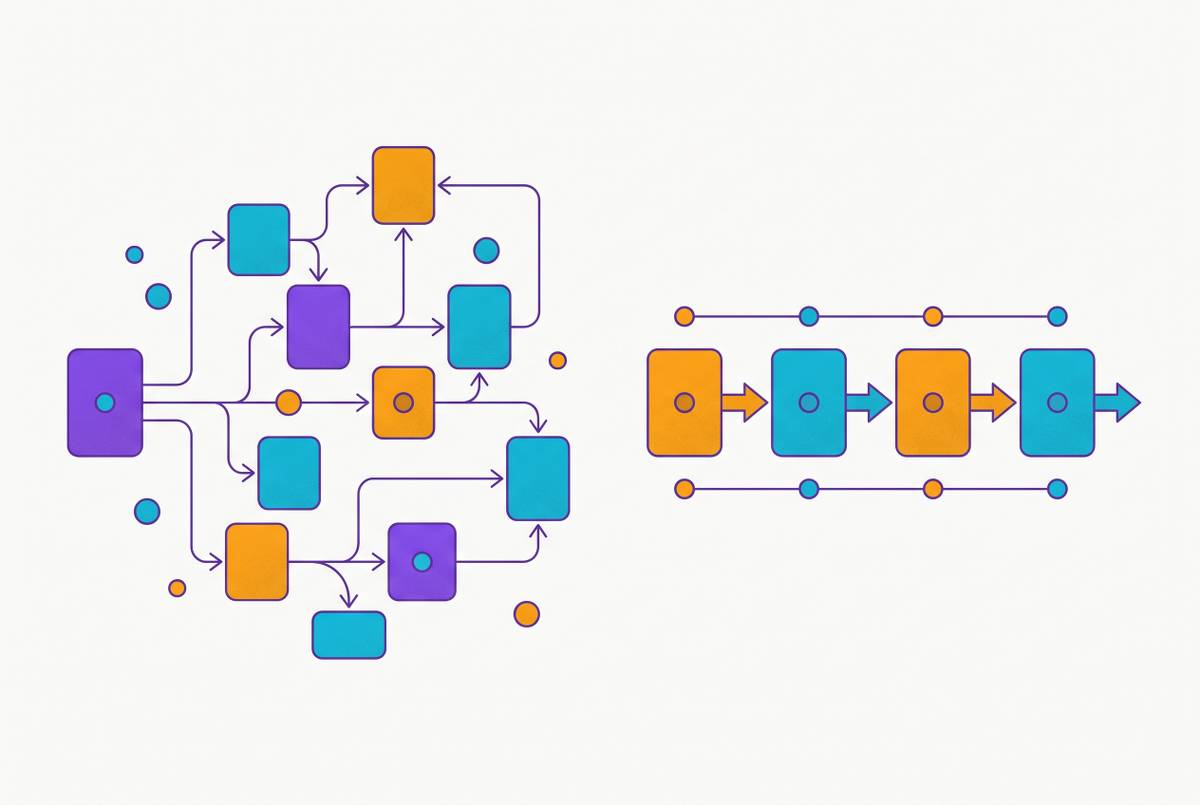
The axis that matters most here is control. Video hands control to the narrator. Sandboxes hand it to the prospect. Interactive tours split the difference, and agentic demos hand it to an AI guide instead of a script or a free environment. A second axis is fidelity: video shows outcomes, sandboxes let the buyer produce outcomes on their own. For a technical evaluator whose entire job is to validate a claim rather than be charmed by one, that difference is enormous.
Think of it as exploration versus explanation. A sandbox hands the prospect the keys. A guided demo, video or interactive, takes them on a tour instead.
Where video demos do their best work in a technical buying journey
Video wins at the top of the funnel, full stop. A visitor arriving cold from paid search or a LinkedIn ad isn't going to sit through a sandbox setup screen. They want proof, fast. This is the moment for a tight, sub-two-minute video that shows exactly one workflow, done well.
That tracks with a simple production principle: a clip that nails one workflow will outconvert a longer overview that skims five. Specificity is what converts, not comprehensiveness.
For technical audiences, a demo video earns trust only if it shows inputs, the resulting output, some sense of how to judge that output, and where a human picks up from there. A highlight reel doesn't cut it with someone trying to evaluate whether your product solves their actual problem. Video also travels in a way sandboxes never will, dropping cleanly into an SDR email, a LinkedIn post, a help center article, or a follow-up after a call, with zero infrastructure required.
AI-generated video has changed the math on all of this. What used to demand studio time and weeks of post-production now takes a fraction of the time and cost, which makes it realistic to build one focused video per use case or persona instead of a single monolithic overview trying to serve everyone. Teams using AI video tools report producing 5–10x more content with the same resources, and the real bottleneck shifts from production capacity to editorial judgment: deciding what's worth making, not whether you can make it.
When one recording session can generate a polished video, a transcript, and a written article all at once, teams stop hoarding content into one giant asset and start segmenting it properly. When one recording session can generate a polished video, a transcript, and a written article all at once, teams stop hoarding content into one giant asset and start segmenting it properly, because each version doesn't mean starting from scratch. That matters a lot for technical buyers, where written SOPs and video walkthroughs need to say the same thing, in the same order, using the same terms.
Video has a hard ceiling, though. A technical evaluator with a specific configuration question gets nothing from a video. They either give up and move to the next vendor or escalate to a rep. That's the exact moment sandboxes stop being a nice-to-have and start being necessary.
Where sandbox environments do their best work and what they genuinely cost
Sandboxes belong late in the journey: proof of concept, competitive side-by-sides, procurement processes that require hands-on verification before signature. This is where a buyer stops watching and starts testing.
What a sandbox does that no video can: let a technical evaluator try their own configuration, confirm an integration actually behaves the way it's supposed to, and reach a conclusion through their own actions instead of taking a narrator's word for it. Motive found that resettable sandboxes, used as leave-behinds after a call, increased trial conversions by 5%. The format effectively extends the demo into the buyer's own time, on their own terms.
Gainsight rolled out Demostack across the organization in the third quarter of 2024 specifically to cut down on solutions-engineer bottlenecks and keep messaging consistent across product lines. Demostack itself reports that interactive demos built this way can shrink sales cycles by up to 30%. PowerSchool, working with Navattic, replaced its complex live sandbox setups with automated sandbox demos and now includes a hands-on experience in 90% of its deals. The team's own reporting says deals that use the vendor-built demos outperform the ones that relied on prospect-led sandbox environments.
None of this comes free. Traditional sandboxes mean spinning up dedicated environments, managing backend infrastructure, loading sample data, and staying in near-constant coordination with engineering. Rebuilding demo environments after every product update consumes significant time before a single prospect even logs in. Automated sandbox platforms exist precisely to solve this: they clone the product into a preconfigured environment, no live data exposure, no bugs from the last sprint, no engineering ticket required for every new prospect.
Enterprise pricing is the honest catch. The most capable platforms, Demostack among them, are priced for enterprise budgets, which puts them out of reach for early-stage or mid-market teams without a real investment decision behind it. And complexity has its own ceiling too: once a product involves multiple integrations and enterprise-grade configuration, click-through tours start showing their limits fast. Rigid sequences, limited pathways, browser restrictions. At that level of complexity, a sandbox stops being optional.
The tools available in 2026 and what each one handles
Navattic builds no-code HTML tours and presenter-led sandbox demos. Screens auto-link, demo data is editable on the fly, and analytics track repeat visitors, time spent per step, and where people drop off. It isn't built to replicate an entire product end to end, it's built for specific sections or workflows, which makes it a strong fit for GTM teams that need scalable, trackable demo environments without leaning on engineering.
Reprise works at the code level, cloning core product functionality closely enough to support high-fidelity POCs and trials. Its Data Studio handles data injection and deep customization. The tradeoff is a real learning curve and a heavier engineering lift, which puts it in enterprise territory for teams that need deep, faithful replication of the actual product.
Demostack covers cloning, live overlays, product tours, and hands-on sandboxes in a single platform, all four demo types under one roof. That's why Gainsight picked it for a full organizational rollout in Q3 2024, aimed at reducing SE bottlenecks across product lines. Pricing keeps it in enterprise-only territory.
Saleo takes a different approach: live demos with real-time data injection directly inside the actual product, not screenshots or recordings standing in for it. Tables, graphs, text, images, and workflows can all be edited live within the demo environment. Its AI Demo Agent runs autonomous demos with co-browsing on the native product. It's multilingual and holds SOC 2 and GDPR compliance, which makes it a fit for teams with strict data governance that still need the realism of a live product.
Karumi represents the agentic category most directly: an AI agent that navigates the real product over a video call, reasons through what it's showing, and holds a genuine two-way conversation with the prospect in real time. It runs natively multilingual on the Enterprise tier (the base plan is single-language), and it carries SOC 2, GDPR, and ISO 27001 certification. No human SE needs to be in the room, so teams exploring async technical evaluations at scale should keep an eye on it.
Walnut focuses on collaborative editing and analytics for interactive demos. Its 2024 State of Product Demos Report found completion rates as high as 67% and conversion improvements up to 32%, useful numbers for mid-market and partner-led sales motions. Demoboost packs multiple demo formats into one platform with AI-powered guided tours, aimed squarely at SMB and SDR teams that need speed over depth.
AI-powered video production platforms are built for customer education rather than sales evaluation. These take a raw screen recording and turn it into a polished video with an AI-rewritten script, a natural-sounding voiceover, smart zoom, captions, and matching documentation, generated from the same session. That's a different job entirely, onboarding and education, not shortlist conversion, but it belongs in the same conversation because it feeds the video side of the format mix described above.
How to match format to moment across the buying journey
At the very top, a first-touch visitor needs an AI-generated or produced video demo under two minutes, proving exactly one workflow. They're not ready to operate your product yet. They need to know it exists and that it does something relevant to them, nothing more.
Mid-funnel, during active research, an interactive click-through tour or a tightly focused recorded demo does the job. The buyer is comparing you against alternatives and needs enough fidelity to justify a spot on the shortlist, but they're still doing this on their own schedule, not yet in validation mode.
Late-stage technical validation calls for a sandbox, no substitute available. By this point the prospect has a specific configuration to test, a procurement box to check, or a competitor's product to run side by side against yours. Passive viewing doesn't earn conviction anymore. Only hands-on proof does.
Post-call, the job shifts to champion enablement: resettable sandbox leave-behinds or short, workflow-specific video clips the internal champion can forward to stakeholders who weren't on the original call. The format has to travel on its own and explain itself without a rep in the room to narrate.
Nearly 80% of the software buying journey happens without a rep present. Both formats have to hold up asynchronously, so the real question at every stage is which async experience the buyer actually needs right then. It's which async experience the buyer actually needs right then.
Get the sequencing wrong and it shows. Sending a sandbox to a first-touch visitor creates friction before any value has been established. Sending a video to a late-stage technical evaluator who needs to verify an integration tells them, unmistakably, that the vendor hasn't thought about what their job actually requires. And consistency matters just as much as sequencing: a buyer who sees a polished video tour on the homepage, then a completely different story on the sales call, then a static PDF afterward starts losing confidence in the whole pitch. Formats need to reinforce one narrative across stages, not contradict each other along the way.
In practice, most PMM and growth teams in 2026 run a focused AI video demo at the top of the landing page and place an interactive or sandbox demo behind the pricing or trial CTA. The two formats work in sequence. They were never in competition to begin with.
What the agentic demo category changes and what it doesn't yet solve
Agentic demos put an AI agent inside the live product interface, letting it interpret what's on screen, explain features, and adjust the walkthrough in real time based on whatever the prospect asks. It's closer to a virtual SE than a demo tool, embedded directly into the experience.
That's a real shift. It offers presales coverage for prospects who want live, responsive product explanation without waiting on a calendar invite, coverage that previously required either a human SE on the call or a passive video or sandbox standing in for one. Karumi runs this on the live product over video call, holding a genuine two-way conversation and supporting multiple languages at the Enterprise tier, with no human required to be present. Saleo's AI Demo Agent runs autonomous demos with co-browsing directly on the native product.
It doesn't replace a sandbox, though. A prospect who needs to test their own configuration, load their own data, or run a real proof of concept still needs an environment they control directly. An agent guiding a walkthrough, however responsive, is still a guided experience. It isn't free exploration.
It doesn't replace video either. Video distributes passively at massive scale, sitting quietly in an email, a social post, a help center article, an onboarding sequence, doing its job with zero attention required in the moment. An agentic demo needs the prospect present and actively engaged. It's synchronous, even without a human rep on the other end.
Agentic demos are compelling and worth tracking closely. Most implementations are still in beta or early adoption, though, so the category earns a place on the radar alongside the video-plus-sandbox foundation that already has real, measured results behind it.
Building a content system that makes all three formats sustainable
The tools that are cheapest to launch tend to become the most expensive to maintain. Demo environments break the moment a product ships an update, and GTM teams describe spending the equivalent of a full-time engineer's attention just keeping sandboxes current after every release cycle.
That's the real argument for treating video, interactive tours, and sandboxes as one connected system instead of three separate projects competing for budget. A recording session built to generate a video should also generate the transcript and documentation behind it. A sandbox built for one enterprise POC should be reusable, not rebuilt from scratch for the next one. Choosing the right format for the moment matters. Building a system where all three formats stay current without draining an engineering team dry matters just as much, and most GTM teams still haven't solved it.