On-Demand Demo Libraries as a Self-Serve Sales Channel
Buying committees research separately, so on-demand demos reach stakeholders live calls can't.
A deal stalls for one reason more often than any other: three stakeholders never got to see the product, because the only demo that existed lived inside a single scheduled call they weren't on, and that operational failure is behind a much larger shift. B2B buyers now research, evaluate, and share product information entirely on their own schedule, and they do it before a sales rep ever enters the picture. An on-demand demo library is the baseline infrastructure for reaching a buying committee that will never all show up on the same call.
B2B buyers no longer wait for a scheduled demo
Gartner's 2025 sales survey found that a majority of B2B buyers prefer a rep-free buying experience, and that buyers spend only a small fraction of their total buying time meeting with suppliers. The rest of that time goes to independent research: reading, comparing, testing, forwarding links to colleagues, forming opinions long before a rep gets a chance to shape them. A scheduled demo assumes a buyer who waits. That buyer has mostly stopped existing.
The stakes get higher as deals get more complex. Enterprise and mid-market purchases now involve buying committees with members across departments, budgets, and time zones, and those members will never all land on one call together. A rep can present to the three people who showed up. A library of on-demand assets is the only mechanism that reaches the full buying committee asynchronously, which is exactly the gap a scheduled demo cannot close.
A demo library versus a demo archive
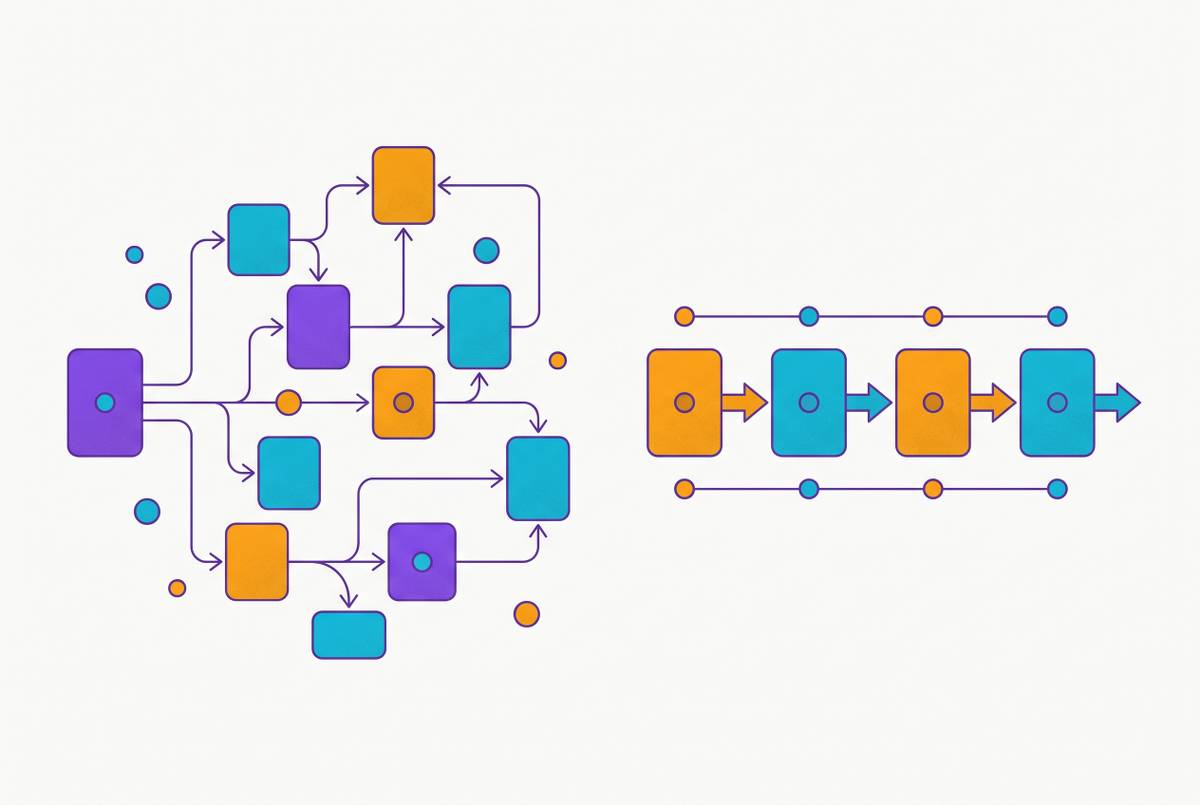
Most companies that claim to have a "demo library" actually have an archive. A folder of screen recordings. A YouTube playlist. A video tab buried in the help center. Someone finds it by accident, watches part of it, and leaves no trace. It isn't gated, isn't tracked, and carries no connection to sales intent data at all. It exists, technically. It does no work.
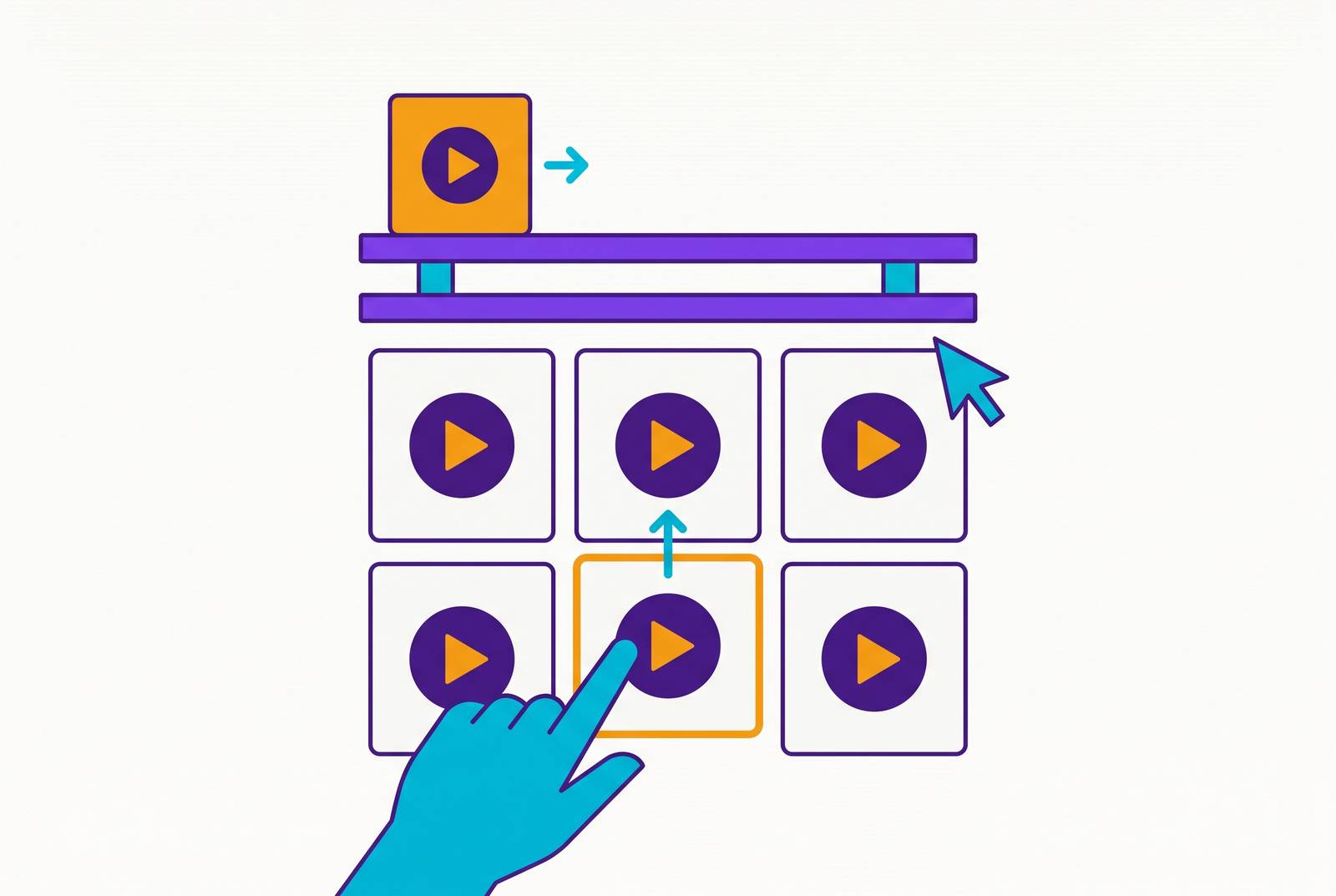
A self-serve sales channel is a different animal. It's a curated set of demo assets, on-demand videos, interactive product tours, AI-powered product simulations, each one matched to a specific buyer role, use case, or funnel stage, and each one instrumented to capture engagement data that flows back to the sales team. Whether the asset knows who's watching and tells someone about it, not production value, makes the difference.
That distinction matters because the formats themselves aren't interchangeable. On-demand video demos are personalized, pre-recorded walkthroughs. Interactive product tours are guided, clickable experiences the buyer drives themselves. AI demo agents are autonomous and conversational, available at any hour. Each does a specific job at a specific moment, and treating them as one undifferentiated pile of "demo content" is how an archive gets built instead of a channel.
Sales engineering time reflects the payoff. Navattic's State of Demo Automation report found that solution engineers spend more than ten hours a week running repetitive early-stage demos, and nearly all SEs say they do this at least sometimes. A functioning library absorbs that early, repetitive work, freeing those hours for the complex, late-stage conversations that actually need a human in the room. Demo automation doesn't replace the sales rep. It filters who reaches the rep in the first place, and that's a different kind of leverage than most teams give it credit for.
Where a demo library fits across the buyer journey
A demo library isn't equally useful at every stage, and treating it like a universal fix is its own kind of mistake; its value depends on where the buyer is standing and how much the deal is worth.
At the top of the funnel, on a company website or in outbound outreach, an embedded interactive demo or a short video walkthrough can replace the "request a demo" form entirely for lower-ACV products. A curious prospect explores and self-qualifies before any sales contact happens.
In the middle of the funnel, the problem shifts to reaching people the rep never spoke to. Async video demos and product simulations fill the space between the first sales call and the final decision meeting, keeping momentum alive without forcing another live session onto everyone's calendar.
After a live call ends, a personalized demo link sent as a follow-up reinforces the product story for stakeholders who weren't on the call.
Annual contract value is the variable that decides how far self-serve can go. Below a certain ACV threshold, a live demo stops making economic sense. The cost per closed-won deal, at typical account executive economics, outruns the value of the deal itself, so self-serve becomes the only discovery motion that holds up. Above a higher ACV threshold, the logic flips: a pure self-serve trial gives away too much of the product to buyers who might extract value from it without ever converting. At that end, the library supplements live selling rather than replacing it.
Rocketlane's product simulation approach illustrates the mid-market version of this principle well. Rather than leaving a stakeholder-sharing problem to chance, the platform lets a sales team send a fully customizable product simulation after a live demo, tailored to a buyer's role, industry, and use case, and built to be shared across the whole buying group without requiring engineering support for each version. That's the ACV logic in practice: a company whose deal size can't justify a live walkthrough for every stakeholder still gets every stakeholder a tailored look at the product, because the simulation does the work the rep's calendar can't.
The retention argument that demo-skeptics overlook
Most arguments about self-serve demos stop at conversion rate: does the demo get the deal signed faster. That's the wrong finish line. A library that only optimizes for closing speed is leaving the bigger number on the table.
A demo-led motion makes sure the buyer understands what the product actually does before they commit money to it. A free trial, left to run on its own, lets a buyer poke around without guidance and frequently sign up for something they only partly understand, the kind of gap Rocketlane's approach to buyer education is built to close. The "I didn't realize it did that" moment produces churn six months later, once the gap between expectation and reality becomes impossible to ignore.
A self-serve demo library extends that same logic without needing a human on every call. An on-demand demo that genuinely educates the right buyer before they sign produces a similar retention advantage to a live demo, at a fraction of the cost and with none of the scheduling friction. The library delivers a better-informed buyer at the moment of signature, which is what actually predicts whether that buyer sticks around.
None of this argues against product-led growth or free trials. Enterprise-level trial conversion rates have fallen industry-wide, which is the honest counterweight to any claim that self-serve alone solves retention. A demo-informed buyer, however they arrive at the purchase, tends to be a better long-term customer than one who explored unguided, and a well-built library delivers that guidance without gating it behind a rep's calendar.
Structuring a demo library so every asset has a defined job
A library converts when every asset is built around one outcome, for one audience, placed at one specific moment in the journey, and wired into analytics that tell the sales team what actually happened.
Start with format matched to function. Short-form, single-workflow videos, roughly four minutes or under, work best for website embeds and outbound outreach. A video that covers one specific workflow gets watched all the way through, bookmarked, and forwarded. A video that tries to cover everything about the product gets abandoned halfway. Interactive product tours belong in the middle of the funnel, where the buyer wants to click through a feature rather than watch someone else click through it for them. For multi-stakeholder deals, role-specific demo paths matter: a CFO and a developer need to see entirely different things, and a library that sends the identical video to both of them wastes the one advantage self-serve has over a live call.
Ahrefs' onboarding flow shows the single-outcome principle in action. Rather than walking a new user through the full breadth of the product, it jumps straight into one critical task and builds the entire onboarding experience around getting that one thing done. A user who finishes that task understands the product's core value immediately. A library that mimics this approach resists the temptation to cram everything into one asset.
The companion-asset principle solves a related problem: not every buyer learns the same way. Generating both a narrated video and a step-by-step written article from the same recording, at the same time, lets a user pick their preferred format without doubling the production workload. ClickUp's approach to this is instructive: after signup, new users get a setup checklist paired with short clips and contextual tooltips, so they can read, watch, or do both at once, following along in whichever mode fits them.
Personalization is where the real conversion gap opens up. Teams that personalize the majority of their demos post substantially higher conversion rates than teams running generic templates. Modular, templatized demo flows, built once and cloned repeatedly for different personas or industries, let personalization scale without a bespoke production effort behind every single asset.
Whether any of this gets seen at all depends on distribution. A library's assets belong in outbound sequences, post-call follow-up emails, website landing pages, help centers, and support responses, not sitting on a single URL waiting for someone to stumble across it. The asset has to find the buyer. Waiting for the buyer to find the asset defeats the purpose of building a library.
Stale assets quietly undo all of it. A prospect who watches a demo that no longer matches the product's current interface doesn't just lose trust in the demo. They lose trust in the product itself. A fast-update system, built on templates that make a single re-record cheap and quick, keeps a library functioning as a sales channel instead of degrading into a liability that actively works against the sales team.
The AI production layer that makes a scalable library operationally viable
For years, the barrier to building a real demo library wasn't strategy. It was production cost and speed: most teams simply couldn't produce and maintain enough assets to cover every persona, workflow, and funnel stage. AI production tools have moved that barrier far enough that any customer education, enablement, or product team can now ship professional-grade video at scale, without a dedicated video department.
Current AI tools handle script cleanup, voiceover generation, smart zoom on key interactions, auto-captions, and branded templates automatically. The human's job shrinks to recording the workflow and making editorial calls, not editing frame by frame. That's a meaningful change in where a team's time goes: less time in an editing timeline, more time deciding what the demo should actually teach.
The production sequence that makes this repeatable runs in a clear order: template, AI-assisted script, voice layer, screen demo, reusable scenes, auto subtitles, LMS-ready export, fast-update system. That sequence is what turns a one-off production task into a system a team can run every week without burning out.
Screen recording stays at the center of all of it. For software training and demo content, a screen recording shows what the interface does because no AI-generated animation matches that specificity. The AI layer's job is to polish and scale what the screen recording captures, not to replace the recording itself.
The practical outcome is a library that can actually keep up with the product. Updating a single demo when the interface changes takes minutes instead of days, and a non-specialist can produce a new asset without waiting in line for a video team. Teams using AI video tools report producing far more content with the same headcount, which means the library can grow to cover more personas, more use cases, and more languages without demanding a bigger team to do it.