Scaling a Demo Program From Startup to Series B Without Rebuilding It
Build demo programs on editable documents, not recordings, to scale without rebuilding.
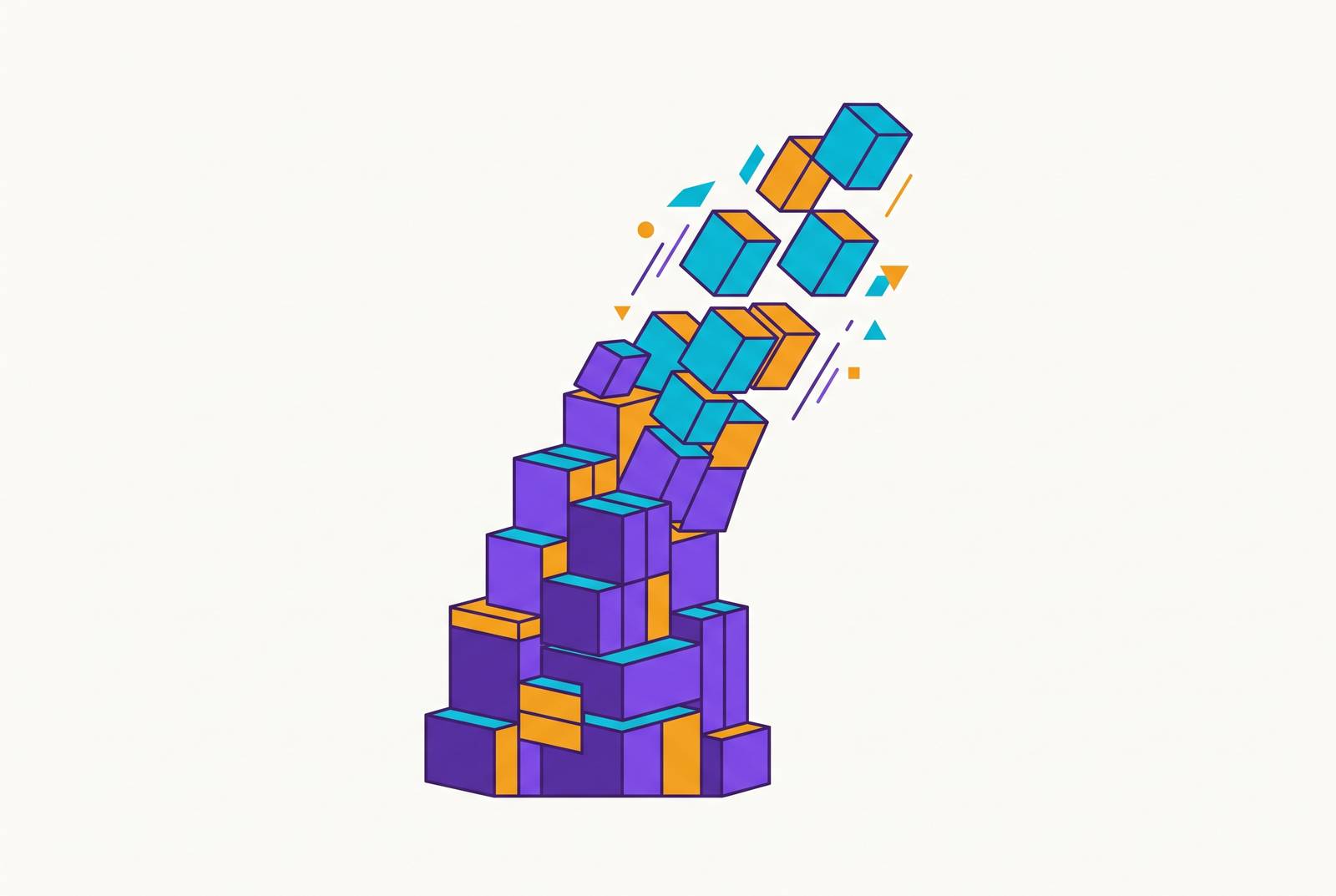
Keeping training videos current through rapid product releases comes down to one architectural choice: build the demo program around editable source documents and modular video components, not standalone recordings. When the script or product guide is the upstream source, a UI change means editing one module and regenerating it, not reshooting an entire library. That single decision is what lets a demo program scale with the company instead of getting rebuilt from scratch at every funding round.
Why demo programs break at the next funding stage
Most demo programs fail because the content was built for a static product, not for one that keeps changing.
At seed stage, this works fine. One or two people record walkthroughs by hand, narrate them live, and update the footage manually after every sprint. Volume is low, the product team is small, and everyone involved knows which five minutes of a video are now outdated. The system holds together because the system is really just a person with context, keeping it in their head.
Series B breaks that model on contact. The expectation at that stage is that onboarding, demo, and training infrastructure can absorb a significant multiplier in customer volume without a matching multiplier in headcount. Artisanal content, the kind built one recording at a time by someone narrating live, cannot clear that bar. The pressure also comes from more buyer segments, more geographies, and more use cases, each demanding its own demo track, often at the same time.
The failure point appears once a single long recording is treated as the source of truth. Every small product change turns into a full re-production project: re-record, re-narrate, re-edit. Content debt builds with every sprint, and by the time a team notices, the backlog of outdated videos is larger than the team that would need to fix it.
Designing a Durable Demo Architecture
Programs that make it from seed to Series B without a rebuild share one design principle: the source of truth is a document or a template, not a recording. Updating a demo means editing a component. It does not mean reshooting the whole thing.
This is the document-to-video principle in practice. When a script, an SOP, or a product guide sits upstream of the video, regenerating that video becomes a downstream operation. Changing a sentence in the script updates the video that depends on it automatically, without requiring a camera, a narrator, and an editing pass.
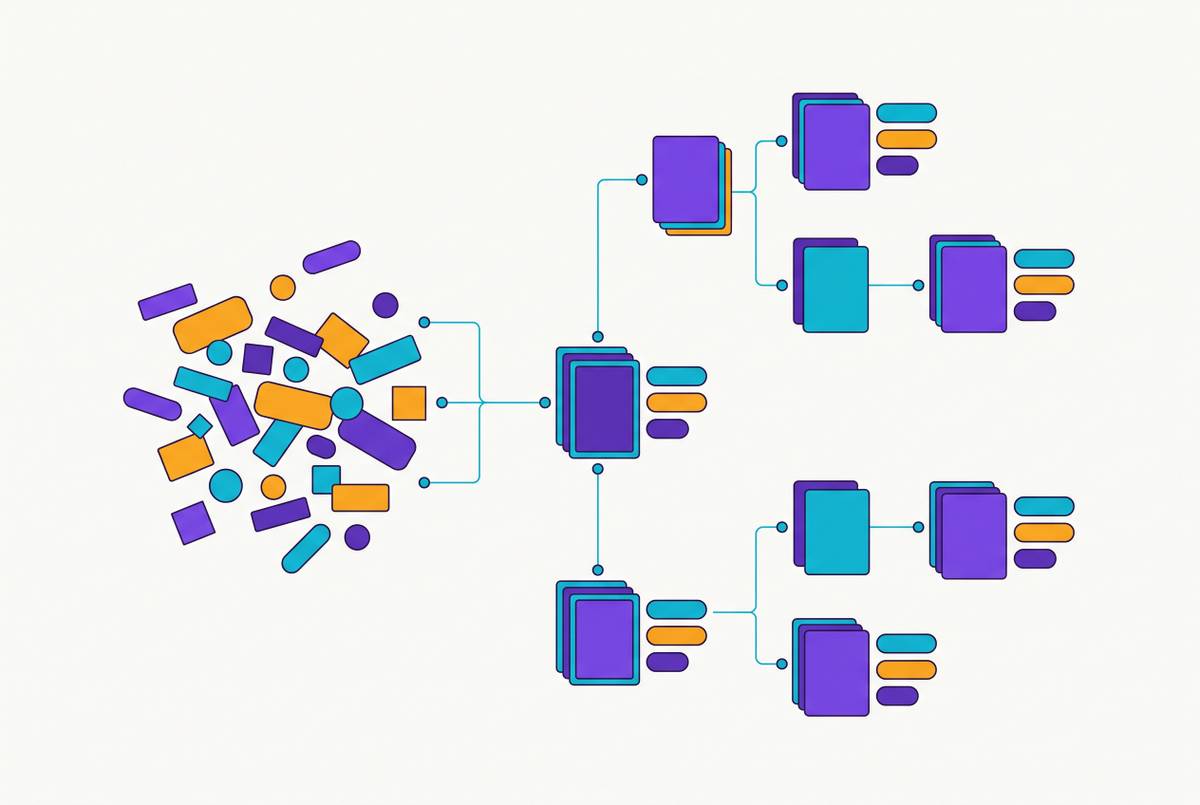
Modular architecture carries this further. Each demo asset should be a discrete, independently updatable unit: one segment per use case, one per persona, one per feature. None of it lives as a single monolithic walkthrough that has to be taken apart every time one piece goes stale. Reusable visual templates reinforce the same idea at the production level: the same canvas, cursor treatment, intro card, caption style, callout color, and outro mean a new recording slots into an existing system instead of forcing a new style decision every time someone sits down to record.
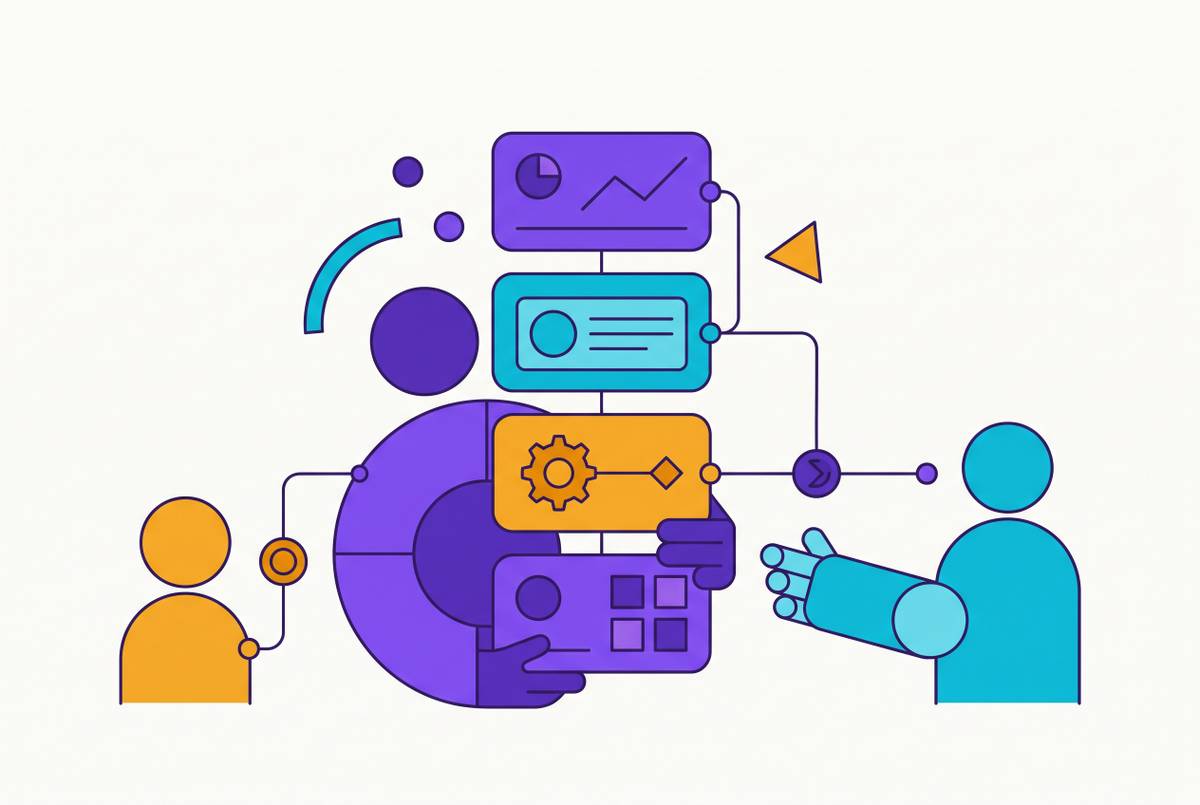
AI-powered platforms like Clueso build around exactly this principle: a team updates a single script, and multiple video formats regenerate from it without anyone touching a camera or an editing timeline. That's the practical shape of the document-to-video idea, not a theoretical one. The architectural choice to design for the component rather than the finished artifact is what separates programs that scale from programs that get rebuilt.
Segmenting demo tracks before volume makes it urgent
Modular content only pays off if a team knows in advance which modules it actually needs. That means tiering demo and onboarding tracks by customer segment at the start, not after the first scaling crisis forces the issue.
Without early tiering, every customer gets the same high-touch experience regardless of how complex their deployment actually is. That's manageable at ten accounts. It collapses at a hundred.
Emily Alexander, Chief Customer Officer at WelcomeHome Software, recommends starting with three broad segments. Enterprise or strategic accounts carry high ARR, many locations or users, strong brand influence, or large upsell potential, and they warrant a dedicated CSM, live training, and custom implementation. Mid-market accounts carry moderate ARR and a structured process with some self-service blended in, supported by a pooled CSM and automated milestone check-ins. Tech-touch accounts are the smallest, with the lowest ARR and the highest emphasis on self-service and automation: in-app guidance, interactive demos, and on-demand video.
Alexander also builds in flexibility. A small-ARR customer with outsized industry influence, or an unusually complex deployment, can still get bumped into a higher-tier experience when it makes sense. The segmentation decision itself needs to happen during or immediately after the sales process. Waiting until after deal close means scrambling to match the right demo assets to the right account after the fact, which defeats the purpose of having tiers.
Each tier maps to a different content format: live walkthrough for enterprise, templated video plus milestone check-ins for mid-market, and a fully self-serve interactive demo or video library for SMB. Templated video generation at scale makes the mid-market and tech-touch tiers economically viable. Without it, those tiers would require dedicated production overhead that defeats the purpose of segmenting by cost to serve.
The sales-to-CS handoff as a content delivery moment, not just a process step
The handoff from sales to customer success is usually described as a coordination problem. It's also the first moment a well-built demo library either proves its value or sits unused.
WelcomeHome requires essential CRM fields, including legacy system, number of units, desired go-live date, expected difficulty, and key contacts, to be filled in before a deal can be marked Closed-Won. The CS team picks up an account with the segment assignment already made.
For enterprise and mid-market accounts, a live internal handoff meeting, where roles are assigned and the demo or training track is selected, closes off the failure mode where an account technically belongs to everyone and therefore gets served by no one.
The content payoff appears right here: when the segment is known at handoff, the CSM deploys a pre-built demo track instead of assembling one from scratch under time pressure. This is where the modular library earns its keep: use case, primary goals, success criteria the customer defined during sales, key stakeholders, and any commitments made during the sales process all need to transfer cleanly, because they determine which demo modules lead the onboarding sequence. A well-designed handoff pairs each segment with the right asset in the right format automatically. When those assets are built on a modular, regenerable foundation rather than as one-off recordings, CS teams can deploy pre-built content at scale without waiting for a production cycle to catch up to sales velocity.
Building the milestone map that keeps demo content current through product changes
Modularity solves half the problem. Knowing which module belongs where also matters, and that requires a milestone map.
Emily Alexander's milestone framework for WelcomeHome runs through sales handoff, internal prep, kickoff, deliverable collection and configuration, data migration and integrations, testing and QA, training, go-live, and early post-go-live support. Each of these is a content trigger, not just a project step on a checklist.
Measuring how long each milestone takes per segment, starting with the simple baseline of contract signature to go-live, gives a team the instrumentation needed to spot where content is failing before customers start churning. Alexander's underlying principle applies directly here: a team can't decrease its time to first value if it doesn't know what that value actually is. For a demo program, that translates to a concrete requirement: a team needs to be able to say which video corresponds to which milestone before it can know which video needs updating when the feature it covers changes.
This is the practical difference milestone-anchored content makes. A product update triggers a targeted update to the one module that covers that feature, not a rebuild of the entire onboarding sequence. The milestone map functions as an index, and that index is what turns a growing content library from something chaotic into something maintainable.
Self-serve content must be good enough to replace a live call
The strongest objection to self-serve demo content is correct as stated: low-quality self-serve material underperforms live onboarding. The fix is not to abandon self-serve and fall back on more live calls. The fix is raising production quality until the gap closes.
Human-led onboarding produces compounding behavioral change, not just task completion, in a way asynchronous content hasn't reliably matched at the same rate. That's a real limitation that any team building a self-serve program should take seriously. A polished, persona-specific, milestone-anchored video that shows the exact workflow a customer needs performs very differently from a raw screen recording with live narration bolted on.
Raw, unedited screen recordings function as a liability more than a strategy. Customers who run into them tend to lose trust in the product behind them, not just in the training material. Interactive walkthroughs, where customers click through a guided workflow instead of passively watching a video, tend to produce higher completion rates, largely because the format matches how people actually learn software: by doing, not by watching someone else do it.
Dock's onboarding guide frames tech-touch onboarding as putting the product itself in charge of education, delivering contextual guidance at the moments customers need it so they learn by doing. That model only works if the content at each trigger point is strong enough to move the customer forward on its own, with no human in the loop to compensate for a weak video. Clueso is built to solve this production problem: AI-assisted workflows that generate polished voiceover, apply smart zoom, and add captions raise the floor of what self-serve content looks like, closing the quality gap without requiring a dedicated video team.
Localization as a structural decision, not a post-launch project
Teams that put off localization until after an international enterprise deal closes face a structural crisis, because a library built from manually narrated recordings can't be localized quickly or affordably at that point.
A program designed around a document source of truth and text-led editing can regenerate localized voiceover without reshooting a single scene. A program built on manually narrated recordings has to reshoot everything or fall back on subtitles, which degrade the viewing experience and signal to international customers that they're an afterthought.
The cost gap between traditional studio localization and AI-assisted localization is wide enough that most early-stage companies ship English-only programs by default, then hit a wall when they close their first international deals after Series A. Deferring localization is a cost that compounds the longer it waits.
Clueso's one-click translation across more than 150 languages shows what this looks like in practice: the same module that ships in English ships in German or Japanese without a separate production workflow behind it. Localization becomes a decision made at the content layer, not a standalone project requiring its own timeline and budget. Global teams who only ever receive English-language content are being treated as a lower priority than everyone else, and a program architecture that can't serve them at the same quality level isn't actually built to scale, no matter how well it performs domestically.
Measuring whether the demo program is working before a funder asks
A demo program that can't show its effect on time-to-value, churn, and support ticket volume won't survive a Series B budget conversation, no matter how well-built it is underneath.
These programs aren't short on ROI. Formalized customer education programs show measurable gains: a Forrester Consulting study commissioned by Intellum found an average 38.3% increase in adoption of products targeted by training, a 15.5% decrease in customer support costs, and a 22.3% average increase in customer retention. Most teams never set up the instrumentation to prove it for their own program.
The fix doesn't require a sophisticated analytics stack. Cohort analysis comparing trained versus untrained customers against retention, support ticket volume, and expansion revenue gives any team a baseline, built from the same contract-signature-to-go-live data already being tracked for milestones. Alexander's principle holds here just as it did for the milestone map: a team can't decrease its time to first value without first knowing what that value is. Forrester Principal Analyst Shari Srebnick's observation that the decision to renew gets made in the first 90 days gives teams a clear window to instrument, comparing outcomes for customers who completed the demo program against those who didn't.
At Series B, nobody asks whether a demo program exists. The questions are what it costs per customer educated, what churn looks like in the cohort that used it, and whether it scales without scaling headcount. A well-instrumented modular program answers all three, and it can only answer them because of decisions made much earlier: modular components instead of monolithic recordings, templates instead of one-off production, a document source of truth instead of a pile of videos nobody can trace back to a script. Those choices make individual content components isolated and trackable. The measurement is the payoff of architecture decisions made back at seed.