Scaling a Customer Education Program Across 33-Plus Languages
Build multilingual support into your content workflow from day one, not as an afterthought.
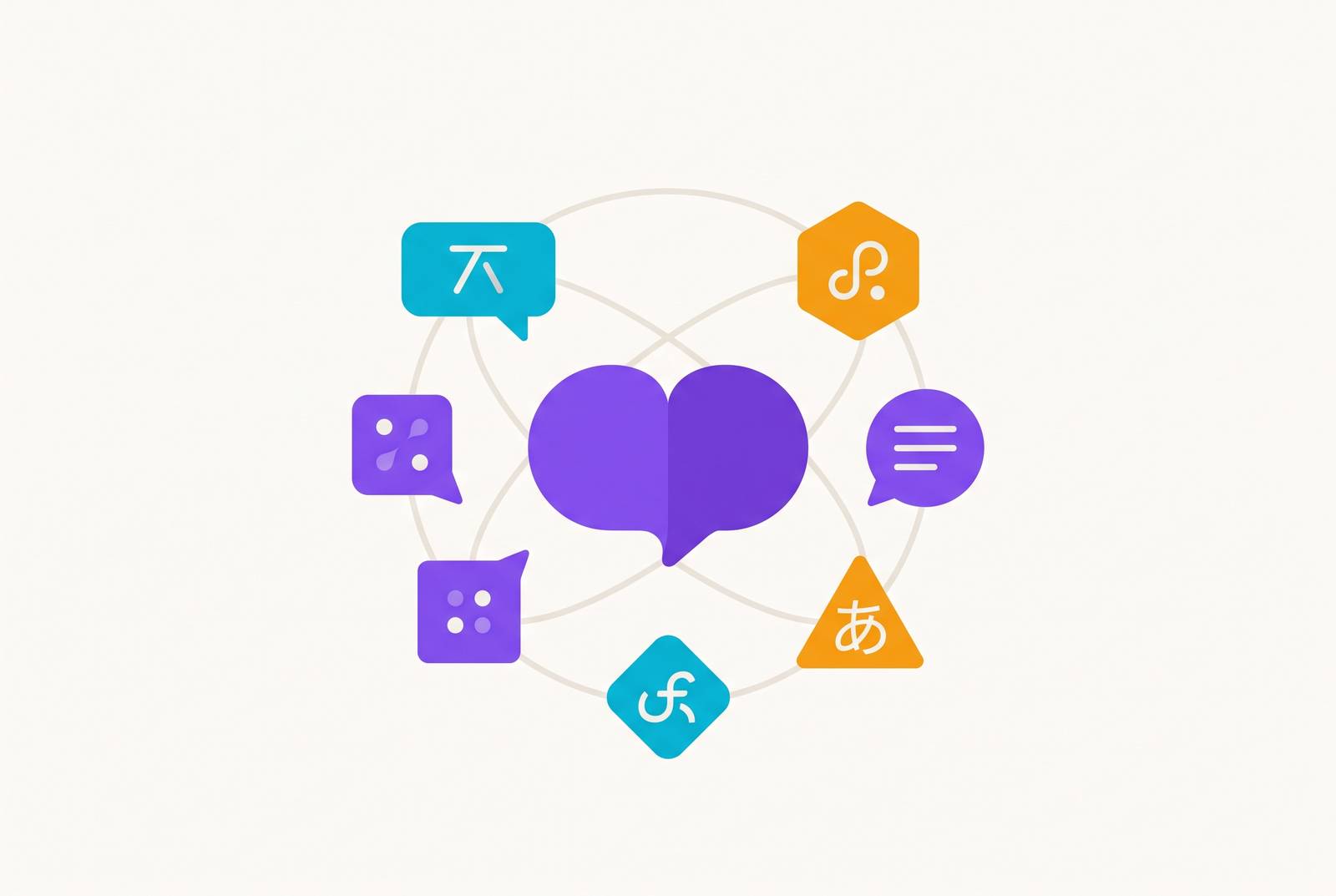
Scaling customer education across 33-plus languages fails when localization is treated as a finishing step. The fix is architectural: build multilingual delivery into the content workflow from the first recording, governed by shared terminology and tiered language policy. Teams that do this ship faster, spend less, and reach every market at the same quality level.
Why customer education programs stall at the language barrier
Most customer education programs are architected only for the language they were built in. That single decision caps their reach and their business impact before a single module ships. The team invests heavily in content strategy, learning paths, and measurement frameworks, then treats translation as a downstream handoff handled by a separate team on a separate timeline. By the time the multilingual version appears, the content has already shipped in English and the global audience is behind.
Absorb LMS's analysis identifies inadequate localization as one of the primary operational reasons customer education programs underperform. The problem is not content quality. Mature programs outperform immature ones on product adoption, support deflection, and customer lifetime value, according to benchmark research from an industry analyst firm. Those outcomes are only achievable when every customer segment can actually access and comprehend the content.
The comprehension gap has real commercial weight. CSA Research found that consumers are significantly more likely to repurchase the same brand when customer care is available in their own language. The inverse is equally true: customers engaging in a non-native language disengage faster, open more support tickets, and churn earlier. Those are the exact outcomes a well-designed education program exists to prevent. Yet the team builds the program as if the English-speaking segment were the whole market.
The mismatch is structural, not logistical. Translation is not a step that got missed. It is a step that was never designed for. When localization lives at the end of the production line, every content update restarts the gap. The multilingual version is always catching up, which means non-English customers are always getting less. That is not a translation problem. That is an architecture problem.
What it actually costs to localize content as an afterthought
Traditional video localization runs through translation agencies, voice talent, studio recording, and manual timeline re-editing. That is a separate production cycle for every language, repeated for every content update. At that unit cost, scaling to dozens of languages across a library of modules is not a budget question. It is an architectural incompatibility. The model simply cannot be run at that volume.
The hidden cost is maintenance. Every product update triggers another full localization cycle across every language variant already published. A team with modules in many languages is not running that many localization projects. It is running 15 localization projects every time any module changes, forever. That is a treadmill that accelerates with every quarter of content production.
Teams caught in this model make a predictable decision: localize less. They pick two or three high-revenue languages and leave all other markets on English-only content. That recreates the comprehension and churn problem the education program was built to solve. The team accepts a structural limitation and calls it a strategy. What emerges is a coverage versus depth trade-off that looks like a fundamental constraint but is actually a symptom of the architecture.
Teams that define explicit localization tiers at least make the decision deliberately rather than by default. Full parity for some languages, delayed parity for others, English-only for the rest. That is better than the silent default of English-everywhere-except-two-markets. Otherwise the tier list is a wish list that the translation agency's invoice contradicts every month.
How AI changes the unit economics of multilingual content delivery
The bolt-on model was never workable at scale because per-language production overhead made each additional language a new project. AI-assisted localization removes that overhead. Adding a fifteenth language costs no more in workflow effort than adding a fifth. The marginal cost per language approaches zero for the heavy lifting: transcription, translation, and voice generation. Turnaround compresses from weeks to hours or days. The sequential model disappears because the sequence itself no longer has a necessary order.
The accuracy bar has crossed the practical threshold for customer education content. LILT's 2025 Forrester Wave results show NVIDIA doubled content volume and Lenovo achieved more than 50 percent cost savings across more than 60 custom models using AI-assisted translation with human verification. These are not pilots. They are production systems at enterprise scale.
The model that emerges is human-in-the-loop, not fully automated. AI handles transcription, translation, and voice. Human reviewers catch terminology errors and cultural nuance. That is faster and cheaper than traditional production while preserving the quality floor customer education requires. The strongest objection is that AI translation introduces errors that damage trust with non-English audiences. The alternative, English-only content for non-English users, already damages trust and comprehension. The comparison is not AI versus perfect human translation. It is AI-assisted translation versus nothing.
Why terminology consistency is the foundation every localization layer depends on
No translation workflow, human or AI, produces consistent multilingual output when the source content uses product terminology inconsistently. The failure mode is terminology drift. When "workspace," "project," and "environment" are used interchangeably across content created by different teams, translation engines absorb that inconsistency and propagate it across every language variant. A customer in another language sees three different words for the same interface element and concludes the product itself is inconsistent.
This matters especially for AI-assisted translation. Machine translation engines learn from data patterns. Inconsistent terminology in the source corpus produces inconsistent output at scale. The problem multiplies rather than staying contained. The fix is a controlled vocabulary: a defined product glossary with approved terms, preferred synonyms, and prohibited variants.
That glossary is the single highest-leverage governance decision a team can make before scaling to multiple languages. It improves both human and AI translation output simultaneously. If each team uses different language for the same product concept, the glossary is the forcing function that surfaces and resolves those inconsistencies. Terminology governance is not a translation detail. It is the foundation every localization layer depends on.
Designing the content workflow so localization is parallel, not sequential
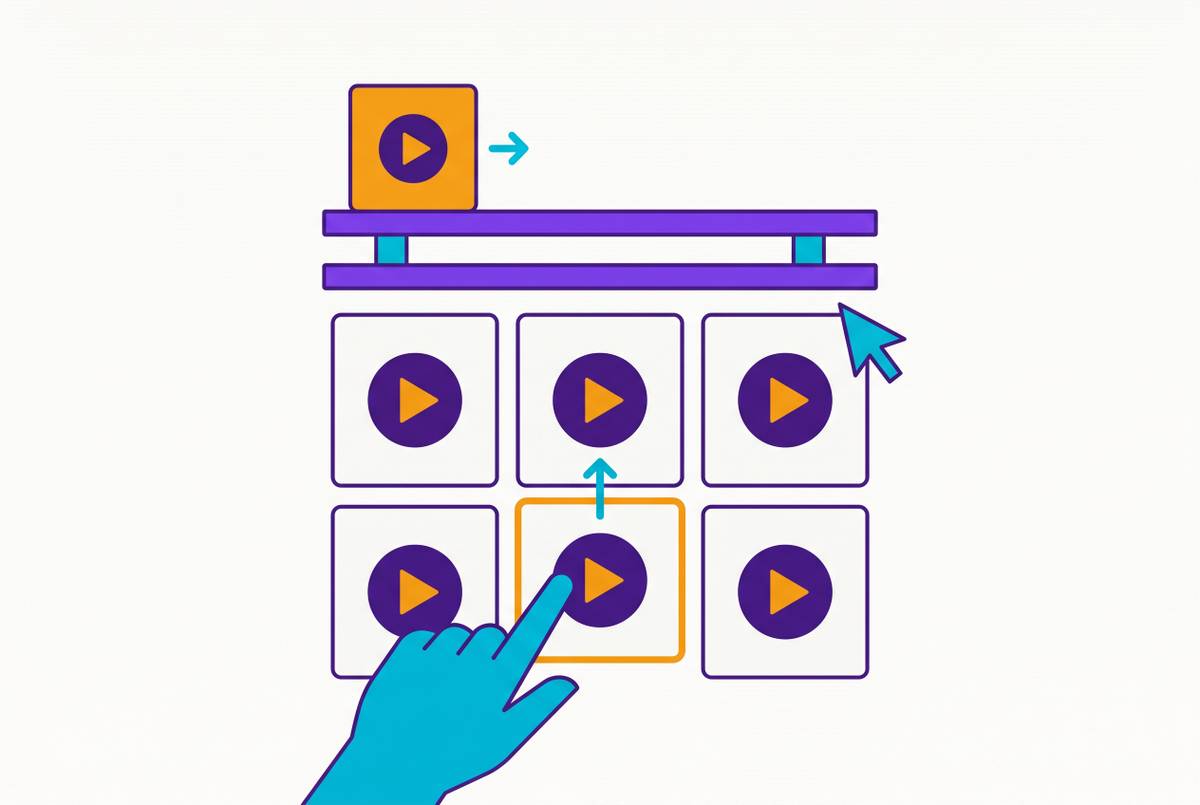
The structural fix is to build localization into the production workflow rather than treating it as a downstream handoff. That requires choosing content formats and tooling that support parallel multilingual output from the first recording. The doc-to-video approach is one concrete architectural decision that supports this. Teams ingest existing SOPs, release notes, or help articles and generate structured video drafts automatically, bypassing the storyboard phase. The result is a source asset that is already format-ready for localization before a human has recorded anything.
Screen-recording-to-polished-tutorial conversion tools compound this advantage. One source event produces both assets, and both assets share the same terminology layer, the same module tag, and the same version number. Localization then happens once, against a source that is already structured for it.
LearnWorlds's 2026 customer education guide establishes modular content as a recommended practice within the educational content pillar of a customer education strategy. Each module is a discrete unit that can be localized independently and updated without retranslating the whole library. A change to the authentication module does not trigger a re-translation of the analytics module.
The practical design decisions that enable parallel localization are specific. Separate the audio layer from the video layer in production, so language swaps do not require re-editing the visual content. Each one removes an entire class of downstream work.
How to tier languages so the program scales without spreading thin
Scaling to 33-plus languages does not mean every piece of content ships in every language simultaneously. It means the program has a deliberate, documented policy for which content gets full parity, which gets delayed parity, and which stays English-only. The three-tier model that emerges from practitioner consensus gives teams a framework to adapt rather than a rigid prescription.
Tier 1 is full parity. Core onboarding content, certification paths, and high-traffic help content in languages serving the largest or highest-value customer segments ship alongside the English version and are maintained in lockstep with product updates. Tier 2 is delayed parity. Advanced feature training and release-specific content in secondary markets follow the English version on a defined lag, typically one release cycle behind, rather than indefinitely. Tier 3 is English-only with navigation in local language. Long-tail content for smaller markets remains in English, but the UI and navigation are localized so the content is findable and the experience is not hostile.
The tiering decision should be driven by customer data, not internal assumptions about which markets matter. Support ticket volume, trial-to-paid conversion rates, and feature adoption metrics by region tell the team which languages actually carry commercial weight. Teams can commit to Tier 1 service-level agreements for high-priority languages without promising the same turnaround for all 33-plus. The tiered approach is the proof that the alternative to full parity everywhere is not English-only everywhere. It is a deliberate, data-driven allocation of localization depth across a language portfolio that the team can actually maintain.
Where customer education should sit in the org to support global delivery
The organizational model that best supports a multilingual customer education program at scale is one where content creation is distributed across teams but governed by shared standards. That is the logic behind the Center of Excellence model. Five organizational models exist for where customer education lives, and the choice has direct consequences for how localization is prioritized and resourced.
In the Customer Success model, education reports to the VP of Customer Success. Alignment to churn and adoption metrics is strong, but SME access is often reactive, and localization competes with immediate escalations for attention. In the Professional Services model, education reports to PS. SME access is easiest because training is tied to billable hours, but foundational and onboarding content can be deprioritized in favor of premium deliverables. The Independent Center of Excellence operates as a shared service across the org. It is best suited for scaling global SaaS programs with distributed teams because it can balance global content standards with regional flexibility without being pulled into one team's priorities.
The CoE model works for multilingual programs specifically because it owns the terminology glossary, the localization tier policy, and the content update workflow as cross-functional infrastructure. Those decisions live with a defined owner rather than informally with whoever is closest to the problem that week. Regardless of org model, the localization failure mode at the team level is institutional knowledge concentration. When one or two people own the translation relationship, the update workflow, or the glossary, the program cannot maintain pace with product changes across 33-plus languages. Formal governance, documented ownership, update triggers, and deprecation policies for outdated content, is what makes the content library sustainable past the initial multilingual build.
How to measure whether the multilingual program is actually working
Completion rates and view counts are not sufficient measures of a multilingual customer education program. The metrics that justify investment are those that connect learning to business outcomes, segmented by language and region. Absorb LMS's analysis maps customer education KPIs directly to business outcomes. Each of these should be tracked separately for localized versus English-only cohorts to surface the actual impact of the multilingual investment.
Four metrics matter most for multilingual program evaluation. Time-to-value by language cohort measures how long it takes customers in each language market to reach first meaningful product use. Trial-to-paid conversion by language is the executive-level proof point. Conversion improvement in non-English markets after localized education ships shows that localization is a revenue decision, not a cost center.
The iteration loop is what makes the measurement framework a system rather than a report. If a Tier 2 language shows support ticket volume or conversion rates comparable to Tier 1 markets, it earns promotion to full parity. If a Tier 1 language shows flat adoption despite full coverage, the problem is content quality or distribution, not localization depth. Absorb LMS makes the distinction between a customer education program and a customer education strategy explicit: the program is the delivery mechanism, while the strategy is the thinking behind it that determines what gets created and connects learning experiences to business outcomes. A multilingual program without a measurement strategy is a translation project, not a scaling investment. Localization built in from the start is the only architecture that allows this kind of measurement and iteration at scale.