Live Demo Delivery Mistakes That Kill Pipeline Momentum
Uninterrupted pitching and vague next steps tank deals before follow-up.
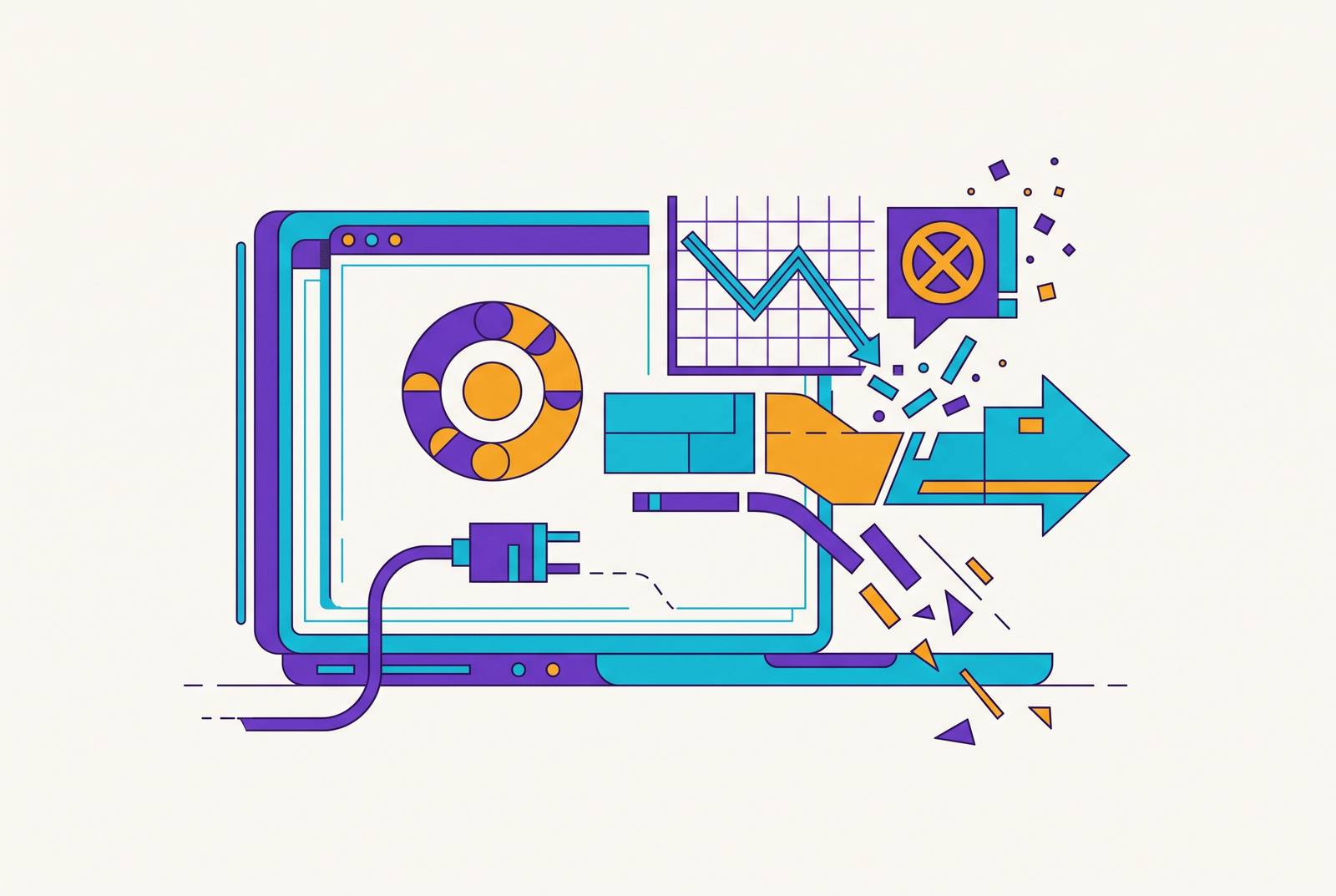
Live demo delivery mistakes kill pipeline momentum when a good-looking call leaves the buyer with no clear reason to act. Picture a buyer who laughed, said the product “looks impressive,” then went quiet for three weeks. The gap between that reaction and the stalled deal is the point. Fixing it takes a better demo process.
Why most live demos lose deals before the follow-up email is sent
The habits that weaken a demo often feel like diligence. Showing more feels thorough, doing all the talking feels like giving the buyer more information, and going straight to the product feels like saving time. That makes these habits hard to spot through the rep’s own impression of the call. Even when the presentation goes well, the buyer can leave unsure which problem the product solves or what should happen next. The failure starts during the conversation, even if it only becomes visible after the follow-up.
That distinction matters because the buyer has work to do without the rep. A typical B2B purchase involves multiple stakeholders, and buyers spend only about a sixth of their evaluation time meeting with any supplier. The demo is a thin slice of a longer, mostly private process. What travels beyond it is the champion’s understanding of the value. If that understanding is weak, the deal loses its internal advocate before another meeting can repair it.
What the data on winning versus losing demos actually shows
Gong’s analysis of thousands of recorded SaaS demos matched to CRM outcomes found a measurable difference in uninterrupted rep talk. Not a single closed-deal demo in the analysis contained more than a brief stretch of uninterrupted pitching. Losing demos regularly contained considerably longer monologues. The difference concerned how long the rep held the floor without a buyer response, rather than how much enthusiasm the rep brought to the presentation.
Gong also found that winning demos ran longer on average than losing demos. The extra time contained two-way dialogue, with more speaker switches per minute. Dixon and McKenna’s study of millions of sales conversations found that a large share of qualified deals were lost to no decision at all. These findings establish two constraints for the demo process, namely room for buyer participation during the call and a defined path beyond it.
Demoing before real discovery: the mistake that poisons everything downstream
Skipping discovery leaves just as much work to do in the sales process. It replaces facts with guesses. Without a clear account of the buyer’s current workflow, pain and desired outcome, the rep has no anchor for deciding what to show. Breadth becomes a substitute for relevance because showing everything feels safer than choosing the wrong thing. The buyer’s request to “just show me the product” does not resolve that uncertainty.
For example, showing an insurance workflow to a buyer who never mentioned compliance needs asks the buyer to supply the missing connection. The rep has demonstrated a capability without establishing why it matters. The rep has even more to guess when discovery leaves out the buying group. One person’s pain may guide the whole demo even though the committee includes six to ten or more others with different priorities. Economic buyers care about ROI, technical evaluators care about integrations, and end users care about daily workflow.
Those missing facts become blockers later, when the proposal, negotiation or pilot scope depends on assumptions nobody has tested. The bridge out of discovery is therefore a buy-in summary. Before opening the product, the rep should summarize the current workflow, top pains, desired outcome and urgency, then have the buyer confirm them.
Feature-dumping: why showing more proves less
Once the rep is guessing, a platform tour becomes the default. Each extra screen appears to strengthen the case, but it can dilute the capability that would actually move the buyer. A broad display leaves buyers doing the translation from feature to workflow to business impact. Most buyers never complete that work independently, so the rep’s apparent thoroughness becomes the buyer’s burden.
Attention makes that burden harder to carry. Buyers skip filler and replay what matters when they control the content, but a live demo has no rewind button. A screen added just to show everything takes attention away from the main point. Broad tours with no priorities or connection to current pain also make product fit harder to see. Instead of conveying confidence, the presentation suggests that the rep has not found a convincing reason for this buyer to care.
Breadth questions can deepen the problem when every request about another capability triggers another full tour. The rep keeps answering while the buyer stops taking it in and starts waiting for the end. Gong’s demo research points in the opposite direction through its upside-down pyramid principle. Winning demos begin with the most valuable capability, in the order of importance established during discovery. The discipline is to give every click a job and move any screen that does not advance the call’s primary outcome into a follow-up asset.
Monologuing past buyer attention: the mechanics of a demo that talks itself to death
Even a well-chosen capability can lose its force if the explanation runs without a break. While the rep keeps talking, the buyer has no chance to ask how what they have heard fits their own situation. Silence then gets mistaken for understanding. In a long monologue, however, a quiet buyer may simply be waiting. The rep loses the signals needed to tell the difference.
The practical response to Gong’s findings is a ceiling on uninterrupted talk. Small questions should interrupt the pitching and return the floor to the buyer. A rep can ask how the demonstrated workflow would fit the current process, or whether managers would use the view on screen or need something simpler. These questions test relevance while the capability is still in front of both people. They turn the demonstration into a working session rather than a presentation followed by a test of memory.
Buyer questions deserve the same space. A question about handling multiple regions may reveal an implementation concern serious enough to redirect the call. Deferring it until the end removes that steering signal while the rep continues down the original path. By the Q&A slot, the buyer may already have half-processed the concern incorrectly. The useful length measure is therefore the balance of talking and listening, with regular speaker changes.
Missing structure: how an unplanned demo hands control to the buyer’s indecision
Dialogue still needs a destination. A rep can avoid both feature-dumping and long monologues yet finish with nothing more useful than a shared impression that the product is nice. Without a planned path, transitions between screens become abrupt and the close becomes whatever fits into the remaining time. The last five minutes get rushed because nobody set that time aside. A promise to send something then stands in for an actual agreement.
An agenda and an outcome frame give both sides a reason for each part of the call. At the start, the rep should state what the demo will prove and make the evaluation mutual. By the end, both sides should know whether there is a fit and, if there is, what the next step should be. The next step can be a pilot, a follow-up call with a specific stakeholder, or a defined evaluation period.
This structure also gives the champion a coherent account to carry internally. Without that account, the champion falls back on describing complex software in PowerPoint or email, which rarely conveys the value demonstrated live. A scoped commitment gives that internal conversation somewhere to lead. But structure is not a script that forbids responding to new information. A ten-step demo path is a planning tool, and its purpose is to leave room for useful improvisation without losing the outcome.
Technical failure and poor preparation: how preventable crashes destroy credibility at the worst moment
A lack of preparation can undo that work before the demo reaches its main point. A staging environment that crashes during a C-suite presentation does not look like harmless bad luck to the people making the decision. It can look like evidence that their time was not taken seriously. Last-minute deploys, untested data and broken integrations expose credibility at the moment the rep needs it most. These are largely preventable risks.
The safeguard is to run every scenario with the exact data intended for the call, then freeze the demo environment against last-minute product or data changes. Preparation also means practicing transitions and objection responses before a live prospect becomes the test audience. Checking who will attend is part of that work because an end-user demo can bore an economic buyer, while a CFO-focused demo can frustrate a technical evaluator. Technical readiness and audience readiness serve the same purpose. Both keep avoidable surprises from consuming the buyer’s time.
How pre-call and post-call content assets extend the demo’s reach into the buying process
Even a well-run live call is only part of the evaluation. After the meeting, a generic recording leaves the buyer to search through the conversation for the useful parts. A generic PDF creates a similar problem for stakeholders who were not there. Neither preserves the tailored explanation simply by containing information about the product. The follow-up must make the demonstrated outcome understandable without the rep’s narration.
Scenario-specific video assets can give the champion a way to carry the relevant value into the buying committee. A stakeholder who missed the call needs to see the outcome in their own context. This is also where material deliberately left out of the live demo can belong. Keeping it outside the call lets buyers focus and still get the useful details later.
Content can improve the other side of the meeting as well. Buyers who use material to learn before a demo come in knowing more and have already made part of their buying decision. That can compress discovery time and raise the quality of the conversation. It does not make discovery unnecessary, because the rep still needs confirmation of the buyer’s situation and priorities. The call can then build on what the buyer knows and spend less time going over every basic point.
Rebuilding the demo process: the sequence that fixes structural mistakes before the next deal
The repair starts with an audit. Sales and enablement teams should examine monologue length, feature count, discovery depth and whether the call produced a scoped next step. Those measures locate the break instead of treating every stalled demo as the same problem. Next, reps should have to complete real discovery before screen sharing. The buyer’s situation and pain need to be confirmed, with a validated buy-in summary establishing what the demo is there to prove.
From that foundation, the team can build a path around one primary outcome and name the capability that leads. Questions and next steps need explicit room in that plan. Monologue caps and conversational checkpoints then make buyer participation part of delivery. Roleplay and recorded demo review allow weak transitions and objection responses to be corrected before a prospect encounters them.
Finally, follow-up content needs to preserve the relevant scenario so the champion can carry its value beyond the call. Discovery creates relevance, relevance creates engagement, and engagement creates the momentum a deal needs to close. These structural mistakes are fixable, and the fixes are known. The test is whether the process gives the buyer something clear to understand, support internally and act on after the screen share ends.